Ultra-Long LED Lifespan: Eliminate Frequent Lamp Replacements and Reduce Downtime
News 2026-10-28
Introduction
Every minute a production line is stopped, money is being lost. In the world of industrial manufacturing, Overall Equipment Effectiveness (OEE) is the ultimate metric of success. Yet, many factories unknowingly sabotage their OEE by relying on outdated UV curing systems. Traditional mercury lamps are fragile, require significant maintenance, and burn out quickly. The introduction of UV LED technology with an ultra-long lifespan has fundamentally changed the game, allowing manufacturers to stop worrying about their light source and focus entirely on producing high-quality products.
The Hidden Costs of Frequent Lamp Replacements
When evaluating a curing system, it is easy to look only at the sticker price of a replacement bulb. However, the true cost of frequent lamp replacement extends far beyond the hardware itself:
Production Downtime: Replacing a lamp requires stopping the conveyor, shutting down the system, and waiting for the new lamp to stabilize. This can halt an entire production line for hours.
Labor and Scheduling: Maintenance teams must be scheduled to perform the replacements, often during overtime or weekends, adding to operational costs.
Recalibration and Scrap: After a mercury lamp is replaced, the optical output changes. Operators must spend time recalibrating the curing parameters, and the first few batches often end up as scrap due to undercuring or overcuring.
Environmental and Safety Hazards: Mercury lamps contain toxic materials. Handling and disposing of them require strict safety protocols and specialized waste management.
Why UV LEDs Outlast Traditional Lamps
UV LED technology represents a massive leap forward in industrial reliability.
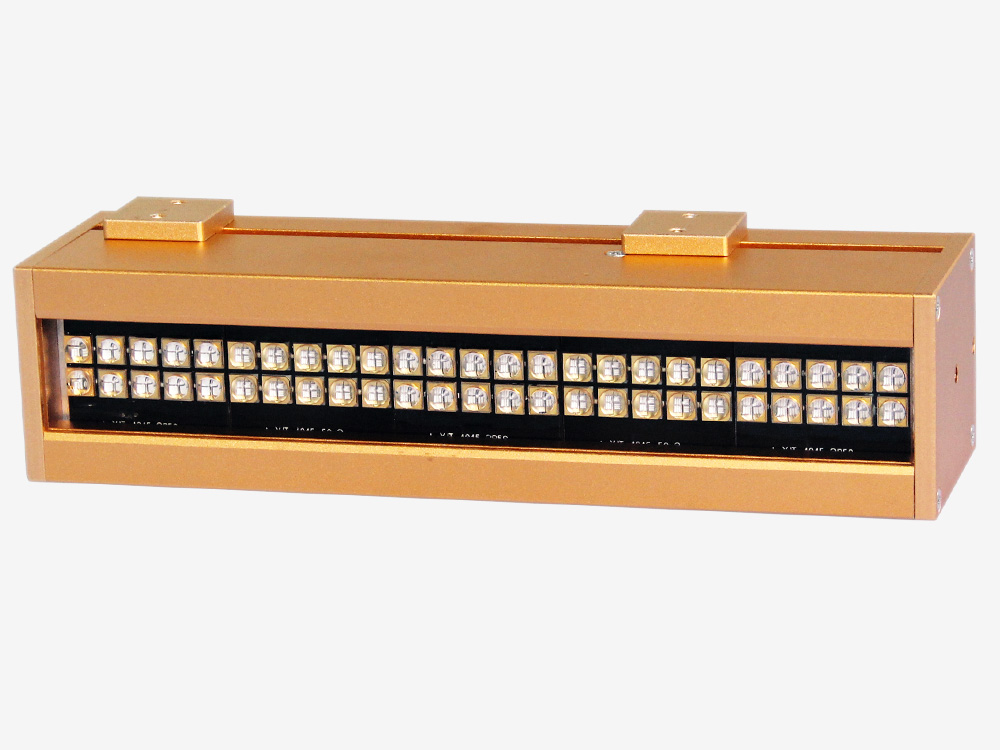
Solid-State Architecture: Unlike mercury lamps that rely on a delicate glass tube, volatile gases, and a heated filament, UV LEDs are solid-state semiconductor devices. They have no filaments to burn out and no glass to shatter.
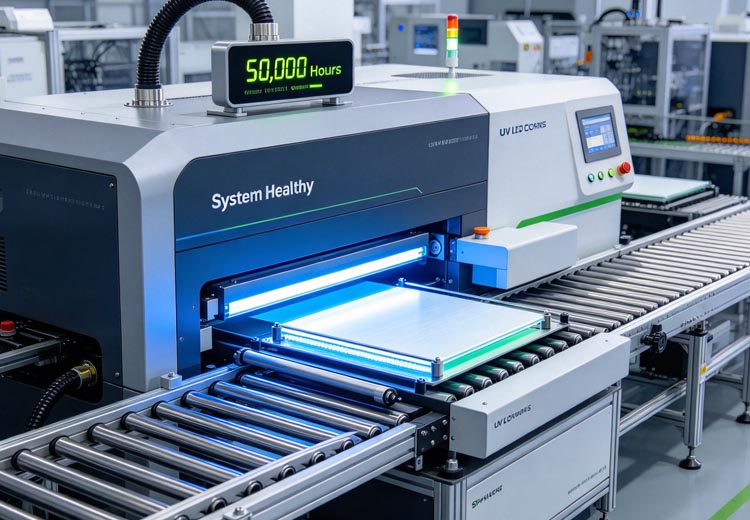
Decades of Operation: A high-quality mercury lamp may last 1,000 to 2,000 hours before requiring replacement. In contrast, premium UV LED systems are engineered to deliver 30,000 to 50,000+ hours of operational life.
No Sudden Failures: Mercury lamps often fail catastrophically. LEDs degrade gradually. Even at the end of their ultra-long lifespan, LEDs will still function, allowing for planned, scheduled maintenance rather than emergency shutdowns.
Engineering the Ultra-Long Lifespan
Achieving tens of thousands of hours of operation is not an accident; it is the result of rigorous engineering:
Advanced Thermal Management: Heat is the primary enemy of LED longevity. By utilizing robust water-cooling systems and high-efficiency heat sinks, the junction temperature of the LED chips is kept extremely low, preventing thermal degradation and guaranteeing a long life.
High-Quality Epitaxial Wafers: Premium LEDs use superior semiconductor materials that naturally resist aging and lumen depreciation under high current loads.
Constant Current Drivers: Intelligent power supplies ensure the LEDs receive a stable, clean electrical current, avoiding electrical stress that can shorten the chip’s lifespan.
The Business Impact: Maximizing Uptime and ROI
Switching to an ultra-long lifespan UV LED system transforms a production floor:
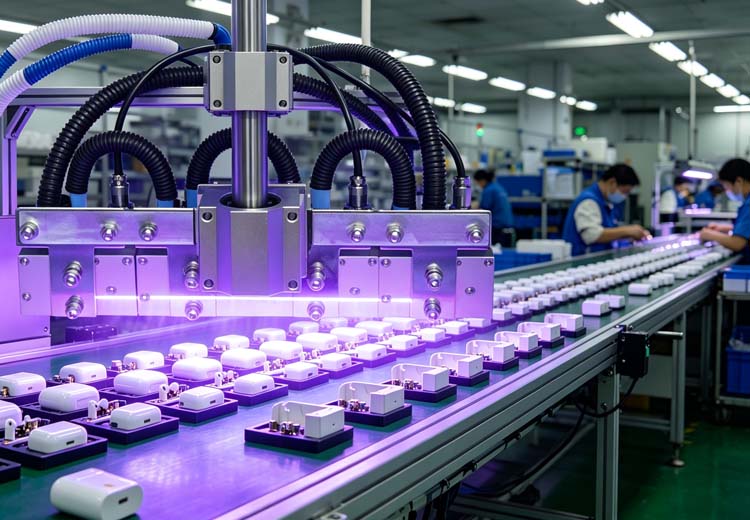
Continuous Operation: Factories can run 24/7 without the looming threat of a lamp burning out mid-shift.
Reduced Spare Parts Inventory: You no longer need to stock dozens of fragile replacement bulbs. This frees up capital and storage space.
Lower Total Cost of Ownership (TCO): While the initial investment for an LED system may be higher than a mercury setup, the elimination of bulb costs, labor costs, and downtime means the LED system pays for itself rapidly.
Predictable Maintenance: Maintenance schedules become focused on cleaning optics rather than replacing critical components.
The era of stopping the line to change a UV bulb is over. With an ultra-long lifespan, UV LED curing systems provide a level of reliability that traditional mercury lamps simply cannot match. By eliminating frequent lamp replacements, manufacturers eliminate downtime, reduce operating costs, and secure a highly stable, continuous production environment for years to come.