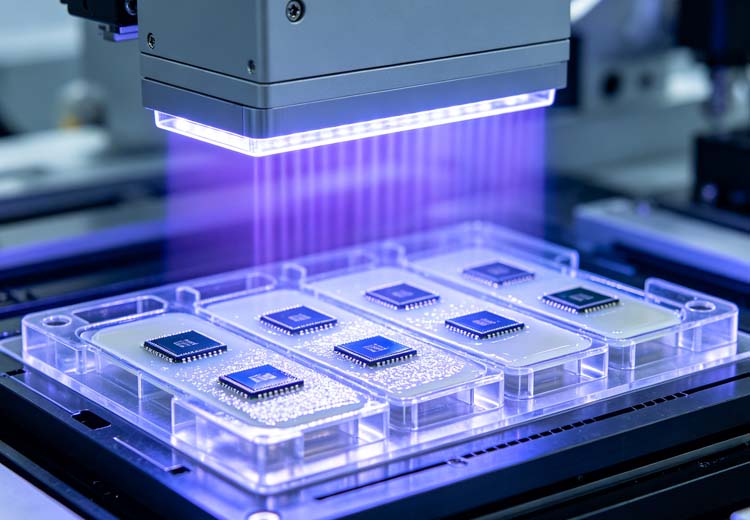
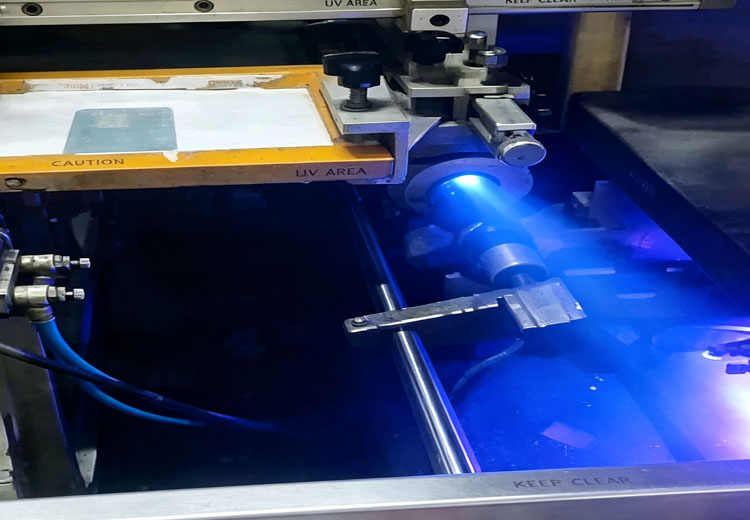
Strong Penetrating Light Source: Full Cure Through Thick Adhesive Layers and On-Spec Bond Strength
News 2026-10-18
Thick adhesive layers are a common source of hidden failure. The surface may look dry, the part may feel hard, and the line may run without obvious defects. Yet the bond can still fail later because the lower part of the adhesive never reached full conversion. A strong penetrating light source is designed to solve this problem. When wavelength, irradiance, dose, and adhesive chemistry are properly matched, thick adhesive layers can cure through more completely, and bond strength can meet specification with greater consistency.
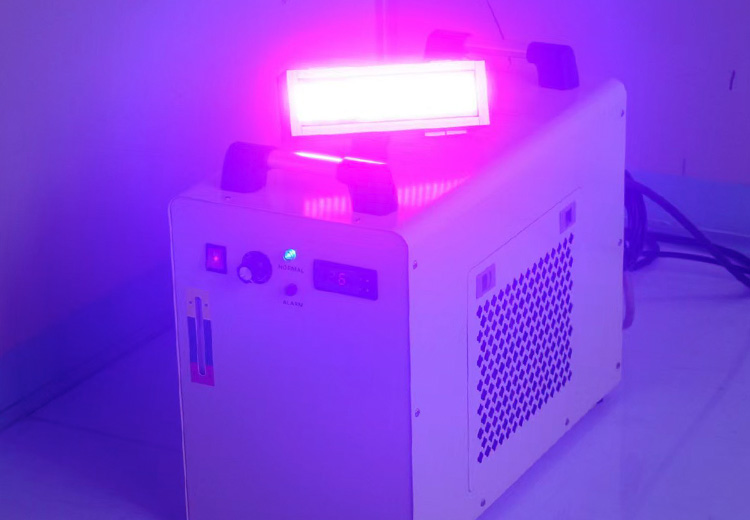
Why Thick Adhesive Layers Resist Full Cure
Light does not travel through adhesive without loss. Pigments, fillers, UV absorbers, and the adhesive resin itself can scatter or absorb photons. In a thick layer, the top surface may receive enough energy while the bottom remains undercured. Oxygen inhibition can also leave a tacky surface, and shadowed areas may receive little direct light. The result is a gradient: hard on top, soft underneath. That hidden soft layer can reduce load-bearing capacity, create internal stress, and cause delayed delamination or creep.
What a Strong Penetrating Light Source Really Means
A strong penetrating light source is not simply a higher-power lamp. It combines high peak irradiance, sufficient total dose, and a wavelength that matches the photoinitiator system. Peak irradiance helps overcome oxygen inhibition and drive rapid initiation. Total dose supports conversion throughout the film. Wavelength determines how deeply light can penetrate and how efficiently the chemistry responds. Uniform illumination, efficient optics, and stable cooling are equally important, because hot spots and shadows can create uneven cure across the bond area.
Wavelength and Photoinitiator Matching
Deeper penetration often favors longer UV wavelengths, but longer wavelength alone is not enough. The photoinitiator must absorb at that wavelength and generate radicals or acid effectively. A strong penetrating light source should be selected together with the adhesive formulation, not after it. For filled, pigmented, or dark adhesives, the optical path is shorter, so the dose requirement rises. In some cases, dual-cure or cationic systems may be more suitable than a conventional free-radical system. The right answer depends on the adhesive, the substrate, and the required bond performance.
Dose and Irradiance Are Not Interchangeable
High irradiance without enough dose can produce a fast surface skin and a weak interior. High dose at low irradiance may improve depth conversion but slow production and expose heat-sensitive parts to longer cycle times. Thick adhesive layers usually need both a strong peak and a sufficient integrated dose. Process windows should be built around the slowest-curing and thickest bond area, not the easiest one. A dose-response ladder at production speed is more useful than a single “good” setting.
Heat, Stress, and Bond Strength
Strong light sources generate heat. If that heat is not controlled, the substrate may distort, the adhesive may shrink, and internal stress may rise. A cured adhesive is not automatically a strong bond. Bond strength depends on surface preparation, wetting, adhesive thickness, joint design, and cure conversion. Overcuring can make some adhesives brittle, while undercuring leaves cohesive strength low. The goal is full through-cure within the adhesive’s designed process window, not maximum energy for its own sake.
How to Confirm Full Cure Through the Layer
Visual inspection is not enough. A reliable validation plan combines direct and indirect checks. Laboratory methods may include FTIR conversion measurement, DSC residual reaction, depth-profile analysis, and hardness gradients. Bond performance can be evaluated with lap-shear, peel, pull-off, or push-out tests, depending on the joint. Production checks can include calibrated radiometry, destructive sampling, and periodic bond-strength testing. The key question is simple: does the deepest part of the adhesive reach the required conversion, and does the finished bond meet its specification after aging?
Practical Checklist for Thick-Layer Curing
Measure peak irradiance and total dose at the bond plane, not only at the lamp window.
Match the light source wavelength to the adhesive’s photoinitiator system.
Control adhesive thickness and avoid unintended gaps or fillets.
Confirm that the substrate and adhesive combination allows sufficient light transmission, or use a dual-cure approach.
Validate the process at the thickest area and the most shadowed area.
Monitor lamp aging, optics cleanliness, and cooling performance.
Test bond strength after cure and after relevant aging or environmental exposure.
Keep a process window that covers normal material and production variation.
Applications
Strong penetrating light sources are useful in electronics potting, sensor bonding, optical assembly, medical device assembly, automotive components, and structural bonding where thick adhesive sections are unavoidable. They are especially valuable when a surface-only cure would create hidden risk. However, if the substrate is completely opaque to the curing wavelength, light cannot reach the bond line from that side. In such cases, a dual-cure adhesive, side illumination, or a different joining method may be required.
Troubleshooting Common Problems
If the surface is tack-free but the bond is weak, suspect undercure at depth, poor surface wetting, or excessive internal stress. If the adhesive cracks, check overcure, shrinkage, and thermal exposure. If cure varies across the part, inspect optics, reflector design, lamp distance, and shadowing. If the process works on thin layers but fails on thick layers, revisit wavelength matching and total dose. Each symptom points to a different part of the system, so change one variable at a time.
Conclusion
A strong penetrating light source can turn thick adhesive layers from a hidden risk into a controlled process. The winning combination is wavelength matching, sufficient peak irradiance, adequate total dose, uniform illumination, thermal control, and a validated bond-strength test. When these elements work together, full through-cure becomes more repeatable, and bond strength can meet specification with fewer surprises.
FAQ
Q1: Can a strong penetrating light source fully cure a thick adhesive layer?
A: It can when the wavelength matches the adhesive chemistry and the layer receives enough total dose. Very thick, filled, or opaque systems may require dual-cure or a different process.
Q2: Why is the surface dry but the bond still weak?
A: The top layer may be cured while the bottom remains undercured. Weak wetting, internal stress, or an unsuitable adhesive can also reduce bond strength.
Q3: Does higher power always improve through-cure?
A: No. Peak irradiance helps, but total dose, wavelength, and heat management also matter. Too much heat can damage the substrate or create stress.
Q4: What wavelength is best for thick adhesive layers?
A: There is no universal wavelength. Longer UV wavelengths can penetrate more deeply, but the photoinitiator must absorb at that wavelength. The adhesive supplier’s data should guide the choice.
Q5: How should bond strength be verified?
A: Use application-relevant tests such as lap-shear, peel, or pull-off, and combine them with cure-conversion checks. Test the thickest and most shadowed areas, not only easy samples.