Why Water‑Cooled LED UV Curing Lamps Deliver Unmatched Performance For Industrial Curing
News 2026-09-07
Many production facilities switching over to LED UV curing quickly learn that not all LED UV lamps perform the same. Air‑cooled units work well for light‑duty jobs, but when manufacturers face continuous‑run conveyor lines, high‑energy demand and heat‑sensitive substrates, water‑cooled LED UV curing lamps bring real‑world advantages that are hard to match on the production floor.
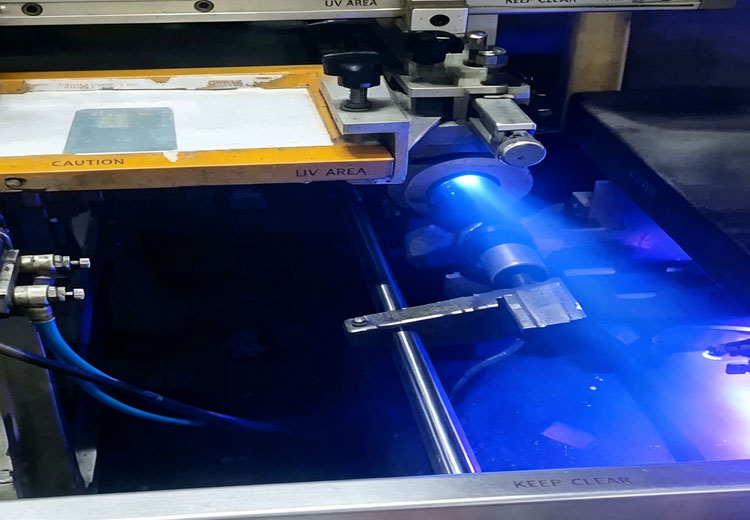
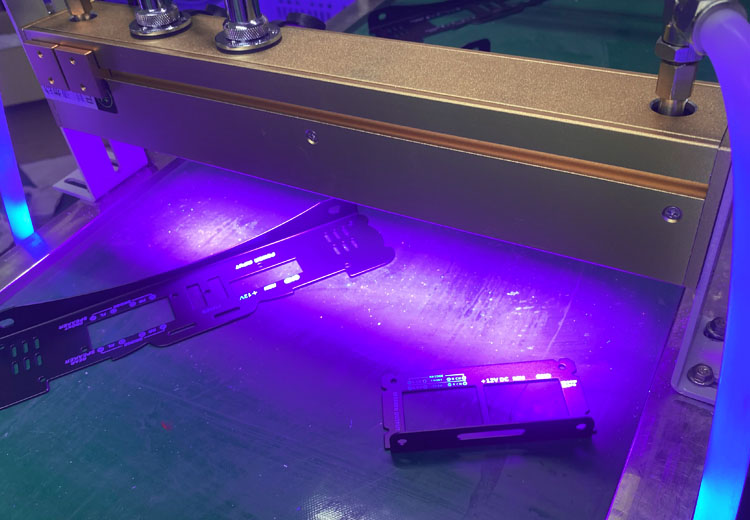
The biggest strength of a water‑cooled LED UV curing lamp lies in its stable temperature control during long‑hour operation. When UV‑LED chips run at high power, they generate substantial heat. Without effective heat dissipation, lamp surface temperature rises, UV output drops gradually, and curing results start to drift. Water‑cooled systems carry heat away from the lamp head steadily. Even after running non‑stop across full production shifts, the lamp maintains consistent UV energy output. Operators see far fewer bad batches caused by weak or uneven curing.
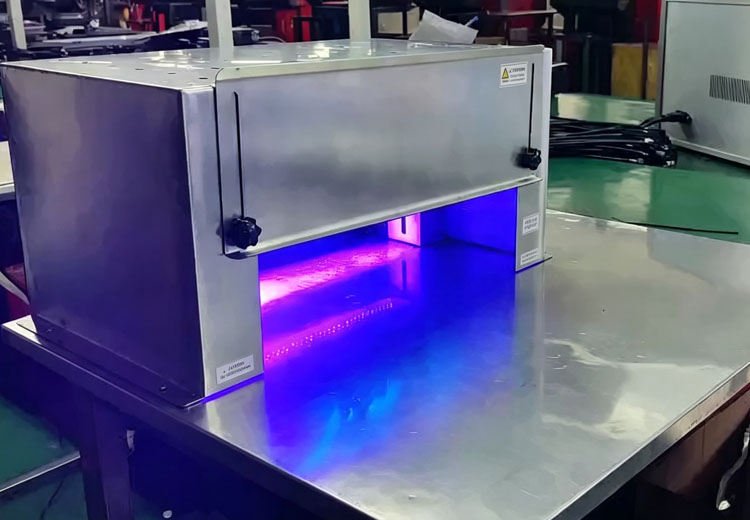
Thanks to reliable cooling, water‑cooled LED UV lamps can support higher power density. This makes them suitable for thick‑layer UV glue, heavily pigmented UV inks and high‑speed conveyor lines. Parts pass under the lamp for only a short time, yet still achieve thorough curing from surface down to depth. Factories can raise line speed without sacrificing finished quality, directly lifting daily output capacity.
Cold‑light performance is another practical benefit. Well‑maintained water‑cooled lamp heads stay at relatively low surface temperature. This opens up curing possibilities for thin plastics, coated films and other heat‑prone materials that would warp or deform under higher‑temperature lamp sources. Shops no longer need to slow down lines just to protect delicate workpieces.
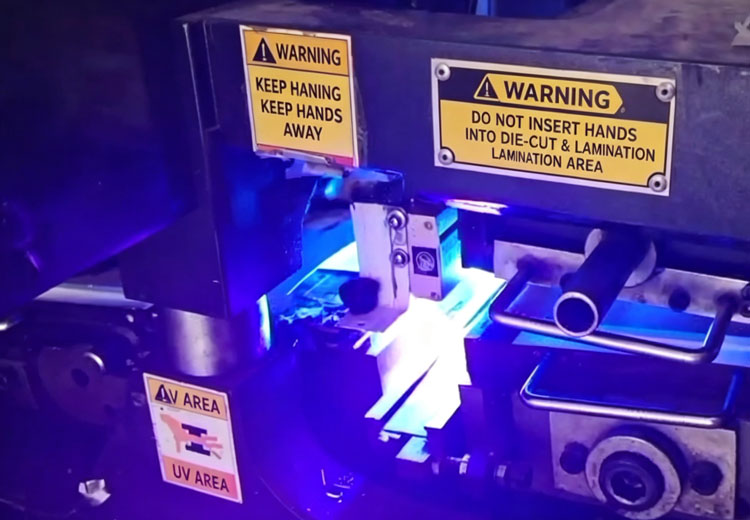
Service life also stands out. Excess heat is the main cause for early failure of UV‑LED chips. By keeping operating temperatures stable, water‑cooled designs extend chip working life. Users experience less frequent lamp replacement, lower downtime and reduced long‑term maintenance costs. For factories running UV processes every single day, this adds up to measurable savings year over year.
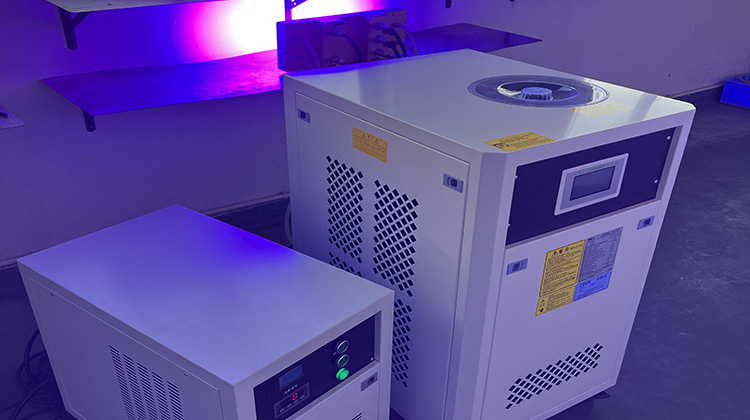
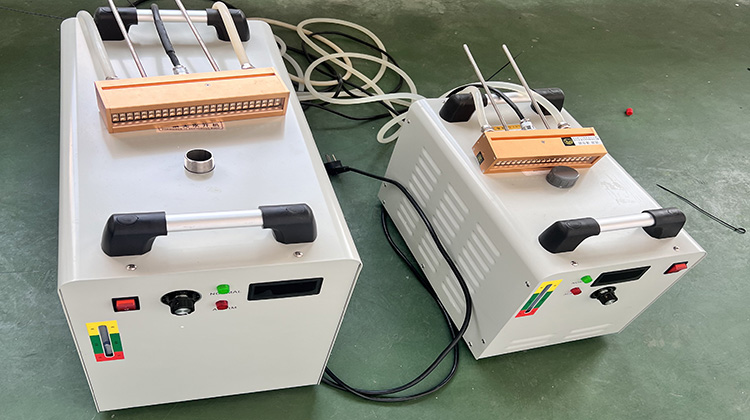
It should be noted that water‑cooled LED UV curing lamps need matched circulating cooling systems and basic routine checks. They are not always necessary for small‑batch, low‑power desktop tasks. But for mass‑production environments pursuing stable energy, fast line speed, low thermal impact and long‑term reliability, their overall advantages are difficult for other UV lamp types to replicate. More printing, electronics and coating manufacturers are choosing water‑cooled LED UV solutions to solve their toughest curing challenges.