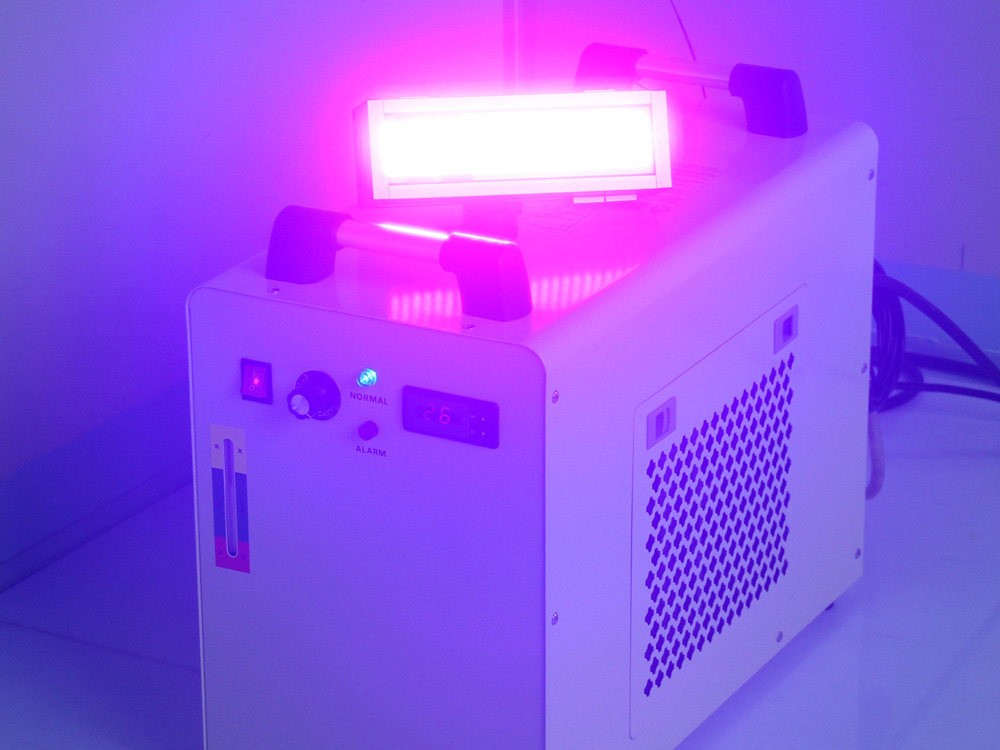
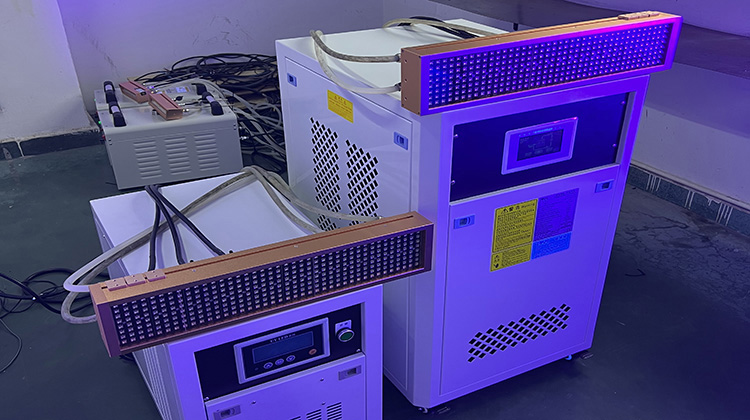
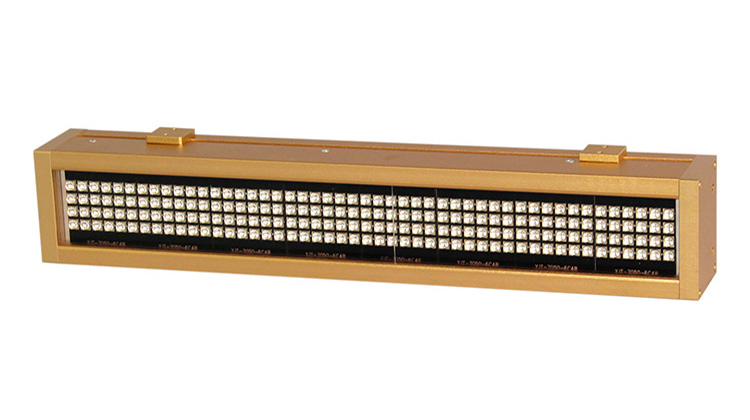
Stable Constant Temperature Output, Minimal Batch Temperature Difference, Steady Yield Without Fluctuation
News 2026-10-08
Most manufacturing plants have encountered a confusing quality problem in mass UV curing production. The first batch of products at the start of production always looks perfect, with uniform surface gloss, firm ink adhesion and stable hardness. However, after the equipment runs continuously for two or three hours, defective products begin to appear sporadically. Some coatings are not fully cured, some surfaces become dull, and individual batches even suffer from peeling and poor scratch resistance.
Most operators will adjust the lamp power or conveyor speed repeatedly, but the quality still cannot be fixed stably. In fact, the core reason is not the material formula or operating parameters. It is the temperature drift of traditional UV equipment during long-term operation.
Traditional mercury UV lamps continue to accumulate heat after long working hours. The internal temperature of the lamp house keeps rising, causing the UV energy output to deviate. Each batch of products is cured in a slightly different temperature environment. These tiny temperature differences continue to accumulate, eventually leading to obvious quality fluctuations, increased scrap rates, and unstable production yields.
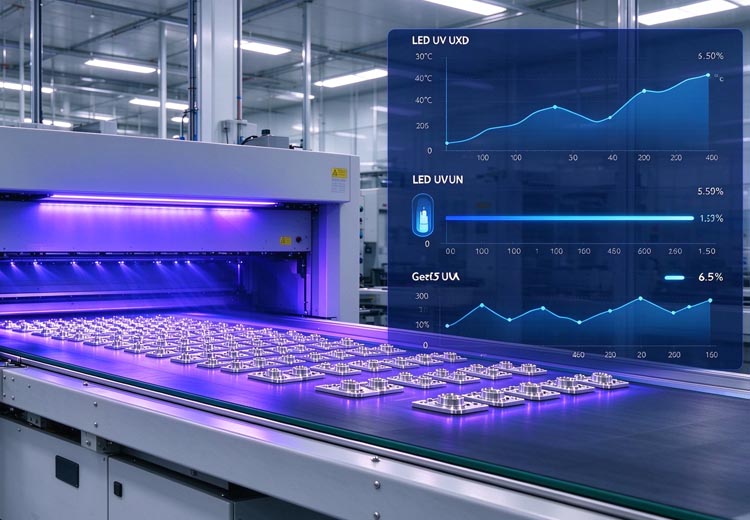
For OEM and mass-processing factories, unstable batch quality means uncontrollable after-sales risks, repeated customer complaints, and increased production costs. This is why more and more precision manufacturing industries are beginning to abandon traditional thermal UV curing and choose constant-temperature LED UV curing systems.
Why Batch Temperature Difference Causes Yield Fluctuation
UV ink, UV varnish and structural adhesive are all temperature-sensitive materials. Their cross-linking reaction speed, curing density, surface tension and final adhesion performance are closely related to the ambient temperature and curing temperature during construction.
When the curing equipment cannot maintain a constant temperature state:
At the initial stage of startup, the equipment temperature is low and stable, and the curing degree of each product is uniform, so the yield is high.
After long-term operation, the internal temperature of the equipment rises continuously. The heat changes the reaction state of the UV material. Some products are over-cured with brittle paint film, while some are under-cured with insufficient adhesion.
This subtle batch difference cannot be detected by naked eyes in a short time, but it will eventually be exposed in subsequent assembly, friction testing and aging testing. This is the main reason why many factories have “random bad products” in mass production.
The Defects of Traditional Mercury Lamp UV Equipment
Mercury lamps rely on high-temperature excitation to generate ultraviolet light. The working temperature of the lamp tube continues to rise with the extension of working time, and the heat cannot be dissipated in time. The entire lamp cavity forms a high-temperature heat accumulation environment.
In actual production, the temperature difference between the start-up stage and the continuous operation stage can reach more than 10 to 30 degrees. Such a large temperature deviation directly leads to inconsistent UV energy density and unstable chemical reaction of the coating.
Therefore, many factories have unstable quality in the morning batch, noon batch and afternoon batch. The production yield fluctuates up and down, and the quality standard cannot be unified, which seriously affects the factory’s delivery capacity and brand credibility.
Constant Temperature LED UV Output Solves Batch Quality Instability
Our industrial LED UV curing equipment adopts cold light excitation and constant temperature control design. Different from mercury lamps that generate heat while working, LED UV only outputs effective ultraviolet wavelength, with almost no infrared thermal radiation.
During 24-hour uninterrupted continuous production, the equipment temperature always maintains a stable low-temperature state, without heat accumulation and temperature drift. The UV intensity output is consistent from the first batch to the last batch of the day.
This stable working state brings two core changes to factory production:
1. Extremely small temperature difference between batches
No matter short-time intermittent production or long-time continuous operation, the curing temperature environment remains unified. There is no temperature rise deviation, ensuring that each product obtains the same curing conditions.
2. Stable curing effect and consistent yield rate
Uniform UV energy and constant temperature environment make the cross-linking reaction of UV ink and glue more sufficient and uniform. The paint film toughness, surface hardness, adhesion and gloss of each batch of products remain stable, without batch fluctuation and sporadic defective products.
Actual Production Benefits for Factories
In precision printing, plastic spraying, electronic bonding and packaging varnishing industries, quality stability is more important than curing speed.
After replacing with constant-temperature LED UV curing equipment, most factories can achieve obvious optimization effects:
The product yield no longer fluctuates with equipment working time;
No unexplained peeling, matte surface and poor curing problems;
Batch difference is effectively controlled, and product consistency is greatly improved;
The rework rate and scrap rate are reduced, and the production cost is more controllable;
Stable batch quality improves customer trust and increases repeat order rate.
Conclusion
Uncontrolled temperature drift is the invisible killer of UV curing quality. Traditional high-heat UV equipment cannot avoid batch temperature differences, which makes product yield always in an unstable state.
Our constant-temperature low-heat LED UV curing system realizes stable UV output and minimal batch temperature deviation. It makes the curing process standardized, repeatable and highly consistent, helping industrial manufacturing enterprises maintain long-term stable yield and high-quality batch production.