Cold Light Curing Design: Zero Infrared Heat, Zero Workpiece Damage
News 2026-10-27
Introduction
In industries like microelectronics, medical device manufacturing, and flexible packaging, UV adhesives and coatings are essential. However, the curing process itself can sometimes be the biggest threat to the product. If a curing system transfers excessive heat to the substrate, the results are disastrous: warping, cracking, color shifting, or the destruction of internal circuits. Traditional high-intensity UV lamps are notorious for this, as they generate intense infrared (IR) radiation. Modern cold light curing design is the antidote, delivering the UV light needed to cure materials while ensuring the workpiece remains virtually heat-free.
Why Traditional UV Curing Damages Workpieces
To understand the value of cold light, we must look at the flaws of traditional systems, particularly mercury vapor lamps.
Mercury lamps operate by superheating gas, which emits a broad spectrum of light, including a massive amount of invisible infrared radiation and visible heat.
Infrared Heat Penetration: IR radiation penetrates deep into plastics and electronics, causing them to expand, warp, or melt.
Thermal Degradation: Sensitive adhesives or biological materials can degrade, yellow, or lose their functional properties when exposed to high temperatures.
The Cooling Wait: Even if the product survives the heat, it often requires a long cooling period before it can be handled or stacked, slowing down production.
The Science of Cold Light Curing
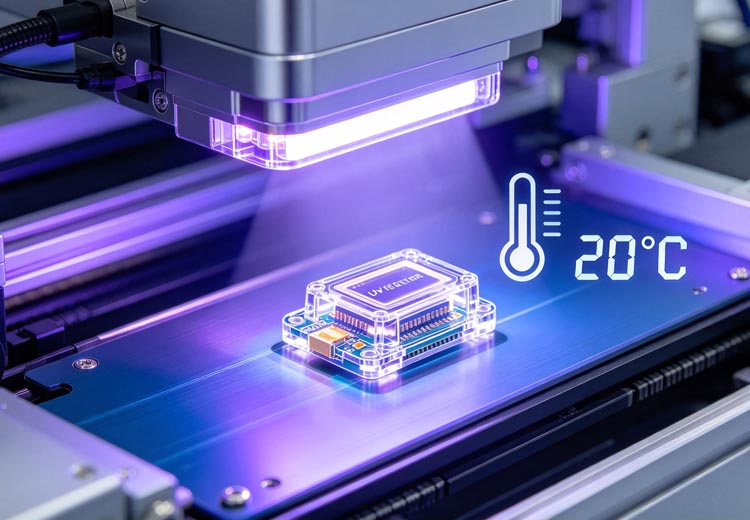
“Cold light” does not mean the light is literally freezing; it means the light is engineered to emit UV radiation without the accompanying infrared heat. Here is how this design is achieved:
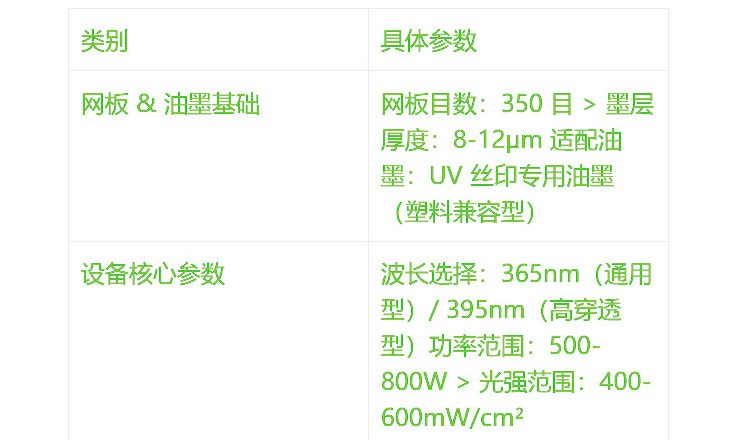
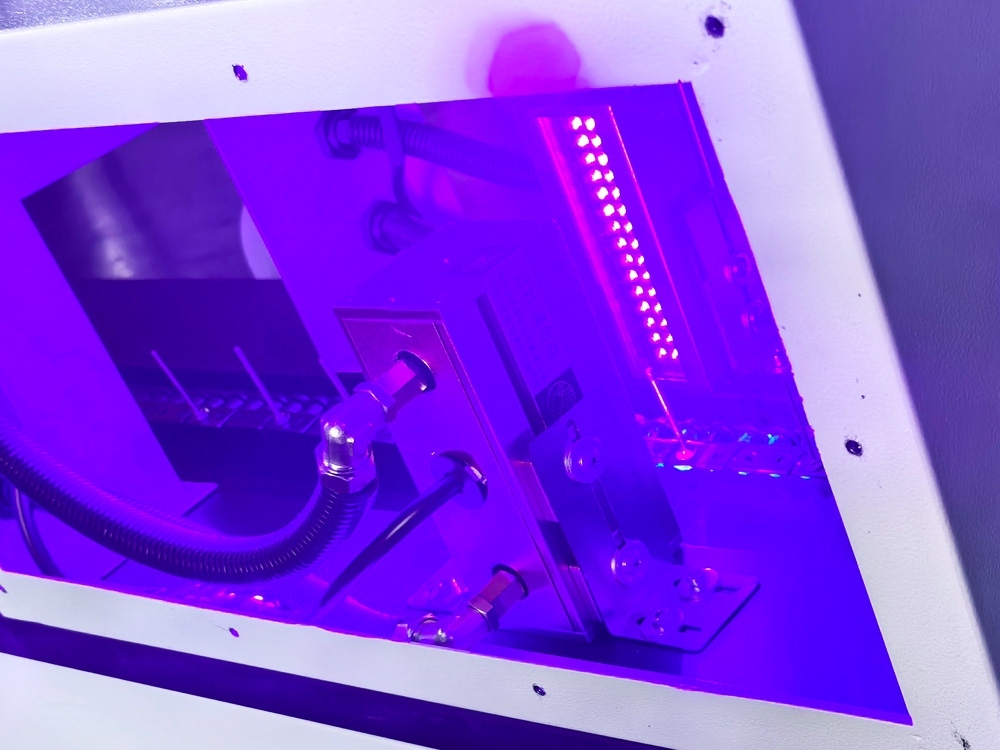
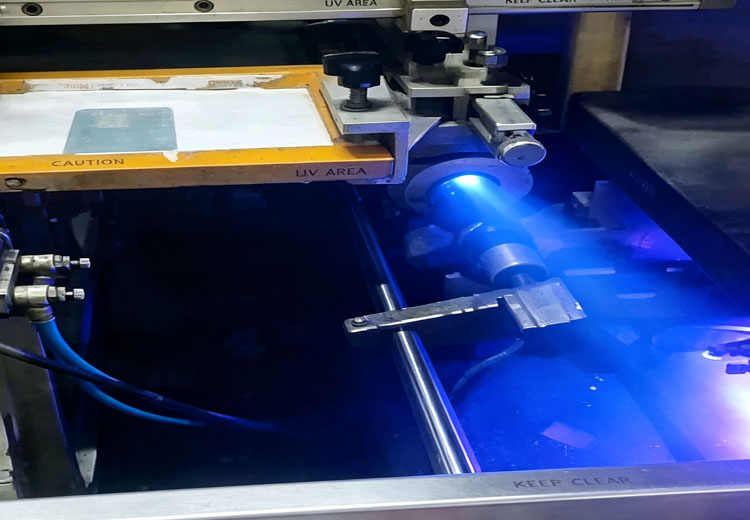
UV LED Technology: UV LEDs are inherently “cold.” They convert electrical energy directly into a specific, narrow wavelength of ultraviolet light (e.g., 365nm or 395nm). They do not rely on superheated filaments or gases, so they emit virtually zero infrared radiation.
Dichroic Reflectors (Cold Mirrors): For systems that still use broad-spectrum light, cold mirrors are used. These specialized optical reflectors reflect UV light toward the workpiece but allow infrared heat to pass straight through them, away from the production area.
Separation of Heat and Light: In high-power UV LED systems, the LED chips do generate heat at their base. However, advanced thermal management designs (like liquid cooling) extract this heat from the back of the chip. The heat is removed by a chiller and never radiates down onto the product.
How Zero IR Heat Transforms Production
Adopting a cold light curing design fundamentally improves product quality and process reliability:
Protection for Heat-Sensitive Substrates: Thin PET films, PVC, and delicate optical lenses can be cured without any risk of deformation or shrinkage.
Preservation of Electronic Components: Surface-mounted devices (SMDs), wire bonds, and sensitive sensors can be encapsulated or bonded without the fear of thermal shock or solder reflow.
Improved Yield and Reduced Scrap: By eliminating heat-induced defects (like bubbles, warping, or hazing), manufacturers significantly reduce scrap rates.
Faster Downstream Processing: Because the product does not absorb massive amounts of heat, it can be immediately moved to the next step in the assembly line without waiting to cool down.
Applications Where Cold Light is Non-Negotiable
Medical Devices: Curing UV adhesives on catheters, syringes, and diagnostic chips without affecting temperature-sensitive materials.
Microelectronics: Encapsulating micro-sensors, camera modules, and PCBs where thermal expansion could break tiny connections.
Thin-Film Packaging: Curing inks and coatings on thin plastic films that would instantly stretch or melt under infrared heat.
3D Printing (SLA/DLP): Layer-by-layer curing of resins where excessive heat would cause layer curling or dimensional inaccuracy.
H2: Conclusion
When curing delicate components, light is the tool, but heat is the enemy. Cold light curing design isolates UV energy from infrared heat, providing a precise, controlled method for solidifying adhesives and coatings. By choosing UV LED systems engineered for zero IR emission, manufacturers protect their most valuable workpieces, ensure flawless yields, and keep their production lines moving without thermal interruptions.
Frequently Asked Questions (FAQ)
Q: Does a cold light curing system produce absolutely no heat?
A: While the light itself has no infrared radiation, the LED chips do generate heat at their base. However, this heat is extracted by heat sinks and water cooling, so the energy reaching the workpiece is virtually heat-free.
Q: Why do traditional mercury lamps damage plastic substrates?
A: Mercury lamps emit a broad spectrum of light, including massive amounts of infrared radiation. This thermal energy is absorbed by plastics, causing them to warp, melt, or degrade.
Q: What is a cold mirror reflector?
A: A cold mirror is a dichroic optical component that reflects UV light but allows infrared heat to pass through it. It is used to separate heat from light in traditional curing systems.