Zero LED Degradation: Ensuring Stable Curing Effects in Long-Term Production
News 2026-10-25
Introduction
When a UV curing system is first installed, it often performs flawlessly. The adhesives cure rapidly, the coatings are scratch-resistant, and the yield is high. But fast forward six months or a year into continuous production. If the UV LED chips have degraded, the system is now delivering less energy than it did on day one. Without compensation, this silent drop in power causes a slow, frustrating decline in product quality. Achieving zero LED degradation is the ultimate guarantee of long-term production stability.
The Hidden Threat of LED Degradation
UV LEDs are semiconductor devices. Over time, heat, electrical stress, and material aging cause microscopic defects in the chip’s crystal lattice. This reduces the internal quantum efficiency, meaning less UV light is produced for the same electrical input.
Thermal Droop: Excessive heat trapped in the LED junction causes a rapid drop in light output.
Lumen Depreciation: Even under normal conditions, LEDs slowly lose brightness over thousands of hours.
The Result: The curing process shifts from optimal to undercured. Adhesives may become tacky, coatings may fail chemical resistance tests, and batch-to-batch consistency is destroyed.
What “Zero Degradation” Actually Means
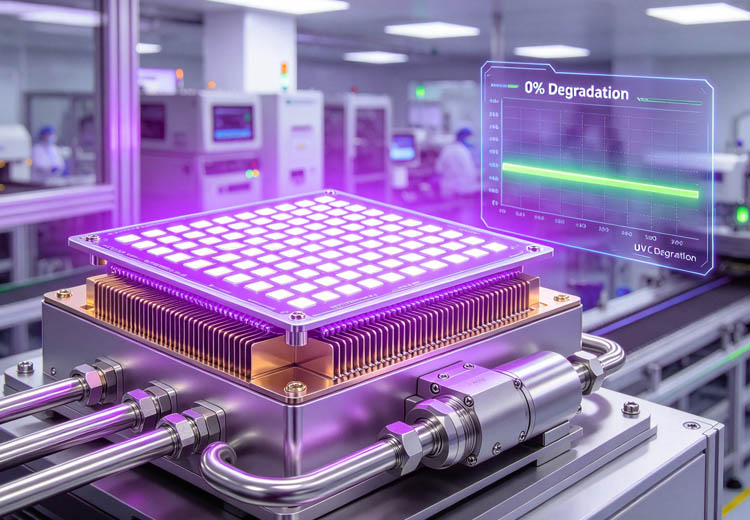
In engineering, absolute zero physical change is nearly impossible. However, in practical manufacturing, “zero degradation” means that the effective curing output remains completely stable throughout the system’s rated lifespan (e.g., 20,000 to 30,000 hours). It means the UV energy delivered today is virtually identical to the energy delivered a year from now, ensuring that the chemical reaction in your adhesives or inks never changes.
Core Technologies Behind Zero Attenuation
How do premium UV curing systems achieve this high level of stability?
Top-Tier Epitaxial Wafers and Packaging: The foundation of stability is the LED chip itself. High-quality chips (like those sourced from tier-one manufacturers) have fewer crystal defects. Advanced ceramic packaging and gold-tin eutectic soldering prevent the chip from degrading under high current.
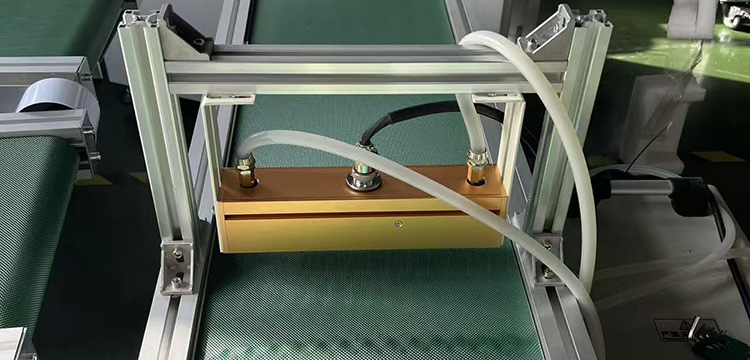
Extreme Thermal Management: Heat is the enemy of LED lifespan. Systems designed for zero degradation utilize robust water-cooling or high-efficiency heat sinks to keep the junction temperature strictly controlled. If the temperature doesn’t spike, thermal droop is eliminated.
Closed-Loop Constant Current Drivers: High-end power supplies monitor the LED array continuously. As the chip ages, the driver automatically adjusts the current to maintain a constant optical output, effectively neutralizing the natural aging process.
The Business Value of Long-Term Stability
Investing in zero-degradation UV systems provides massive returns for continuous production:
Elimination of Re-calibration: You don’t need to constantly adjust conveyor speeds or increase power to compensate for a weakening lamp.
Uninterrupted Quality: The 100,000th part produced a year later will look exactly like the first part. This is critical for automotive, medical, and electronics manufacturing.
Reduced Maintenance Costs: Fewer lamp replacements mean less downtime and lower operational expenses.
Conclusion
A UV curing system is an investment in your product’s quality. If the light source degrades, your product quality degrades with it. By choosing systems engineered for zero LED degradation—featuring robust cooling, premium chips, and intelligent controls—you lock in a stable curing effect. This ensures that your production line remains profitable, reliable, and perfectly consistent for years to come.
Frequently Asked Questions (FAQ)
Q: What causes UV LED degradation?
A: Degradation is primarily caused by heat (thermal droop) and electrical stress over time, which create defects in the semiconductor crystal, reducing light output efficiency.
Q: How does zero LED degradation affect curing stability?
A: It ensures that the exact same UV dose is delivered to the product day after day. This prevents undercuring, adhesion failures, and batch-to-batch variations over long production runs.
Q: Can I just replace the LED lamps when they degrade?
A: While possible, it is costly and causes production downtime. Furthermore, replacing a single lamp changes the uniformity of the entire array. It is more efficient to use a system designed to maintain constant energy output.