Why Water-Cooled LED UV Curing Lamps Stand Out for Glass UV Glue Bonding
News 2026-09-11
Many factories that bond glass parts with UV glue learn quickly that curing quality makes or breaks the final product. Glass craft panels, cosmetic glass components, display covers and decorative glass assemblies all rely on UV adhesive to create clean, invisible joints. But curing glass with UV glue is not as simple as shining ultraviolet light onto the glue gap. Heat spikes and unstable UV power are two of the most common headaches. This is where water-cooled LED UV curing lamps bring practical advantages for glass bonding jobs.
Glass is brittle and sensitive to sudden temperature changes. Even a small amount of uneven heat during curing can create internal stress inside thin glass sheets. In the worst cases, glass cracks hours after assembly, long after the production step is finished. Traditional mercury lamps blast out lots of infrared heat. Regular air-cooled LED UV units also face limits when running nonstop at high power; their LED chips heat up, and UV intensity drops over time.
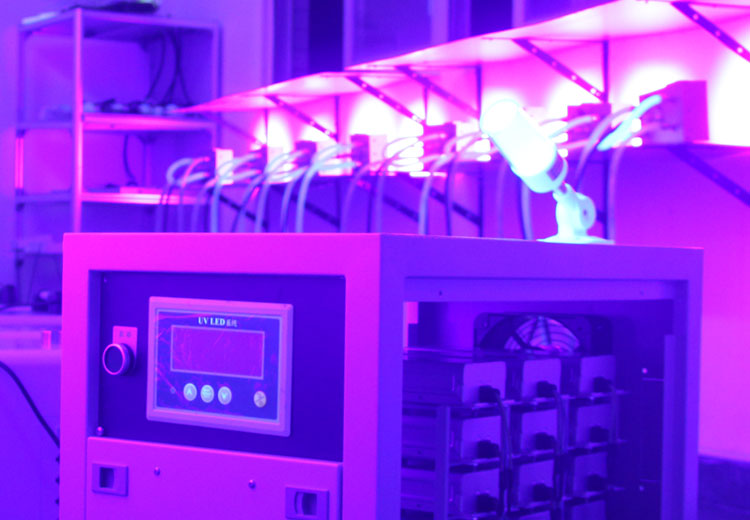
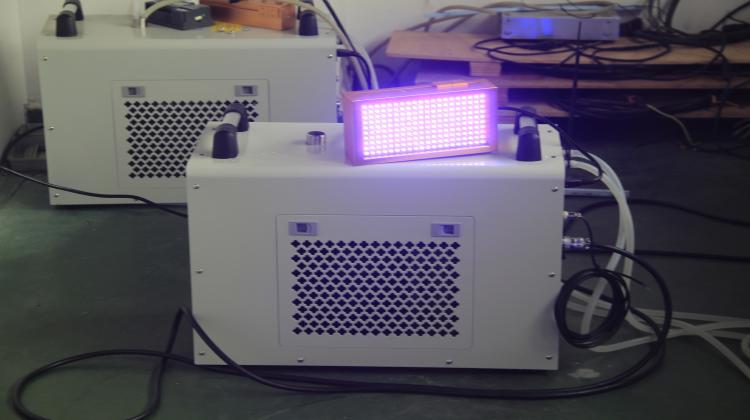
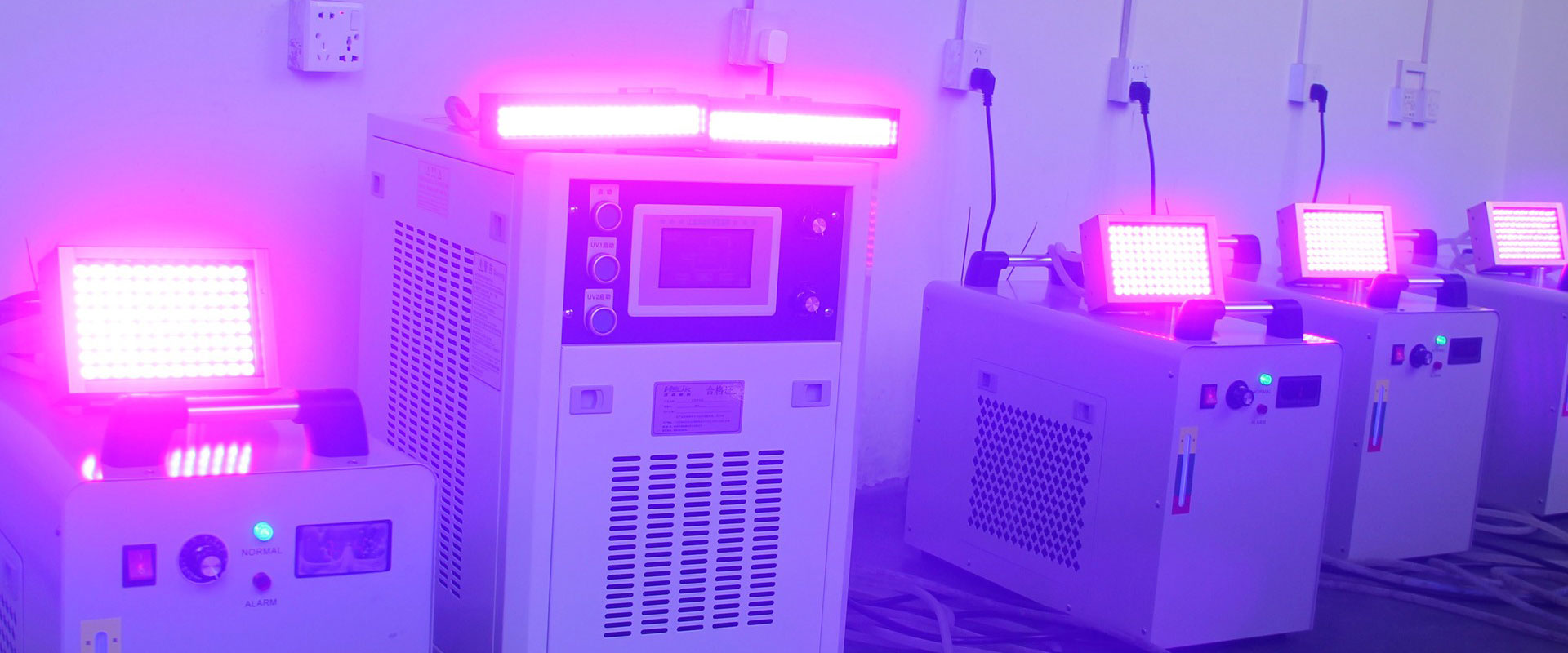
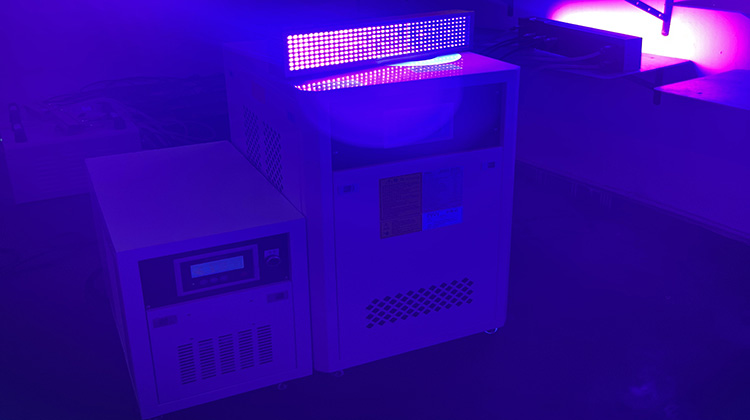
Water-cooled LED UV curing lamps solve this heat problem with circulating liquid cooling. The water loop pulls heat directly away from the LED chips continuously, even during hours of non-stop production. The lamp head stays at a safe low temperature, so minimal heat transfers to the glass workpiece. Thin or delicate glass will not build thermal stress, lowering the risk of cracking after UV glue curing.
Consistent UV energy is another critical factor for glass glue bonding. UV adhesive cures through a chemical cross-link reaction triggered by UV light. If the light power fluctuates, the glue may cure on the surface while staying soft inside the joint. This hidden under-curing causes weak bonds that separate easily. The stable cooling system of water-cooled LED UV lamps keeps chips running at a constant temperature, so UV energy stays uniform across the entire illuminated area.Every glue seam cures fully from top to bottom.
For premium glass products, the visual quality of the glue line matters just as much as bonding strength. Buyers want crystal-clear glue joints with no cloudiness, yellow tint or tiny bubbles trapped inside. When UV glue cures evenly with steady UV output from a water-cooled LED UV lamp, the finished seam remains transparent. The bond holds tight while keeping the clean look customers expect for glass decorations and display components.
These lamps fit smoothly into automated glass assembly lines. They turn on instantly with no warm-up period. As glass workpieces move under the lamp on a conveyor, the UV glue bonds in seconds. Lamp irradiation width can also be customized to match different glass sizes, from small glass ornaments to large flat glass panels.
From daily operation perspective, water-cooled LED UV curing lamps also cut long-run production costs. Compared with mercury lamps, they use far less power and have a much longer service life. No ozone forms during operation, and there is no mercury material, creating a safer, cleaner workshop environment. Routine maintenance mainly involves checking the water circulation system, which does not require frequent lamp replacement.
Not all glass bonding jobs need water cooling. Small batch manual assembly can use air-cooled LED UV lamps. But high-volume production, thick glue layers, large bonding areas and ultra-thin glass work all benefit greatly from water-cooled models. The 395nm wavelength is the most common choice for most glass-bonding UV adhesives.
For manufacturers working with glass-to-glass UV glue assembly, water-cooled LED UV curing lamps are more than just a light source. It controls heat, locks in stable UV energy, preserves clear glue seams and prevents glass thermal cracking. It is a reliable upgrade for anyone looking to reduce defective glass assemblies and maintain consistent bonding quality in mass production.