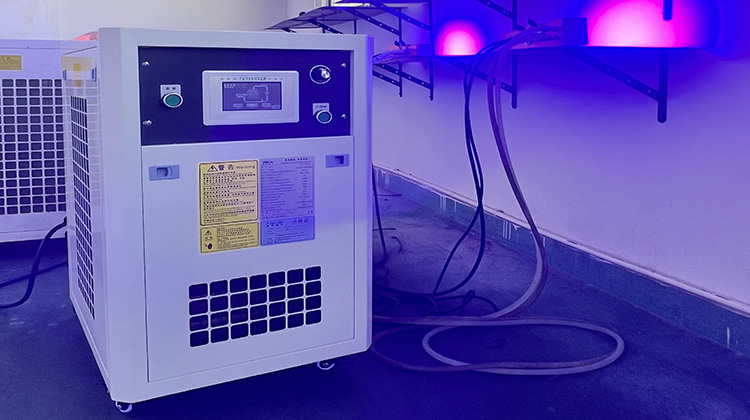
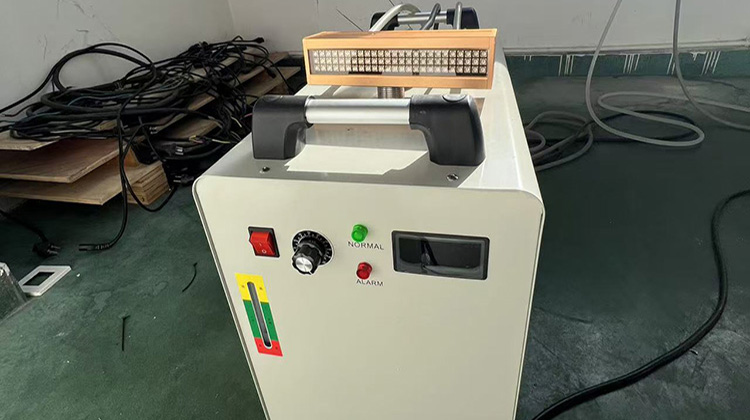
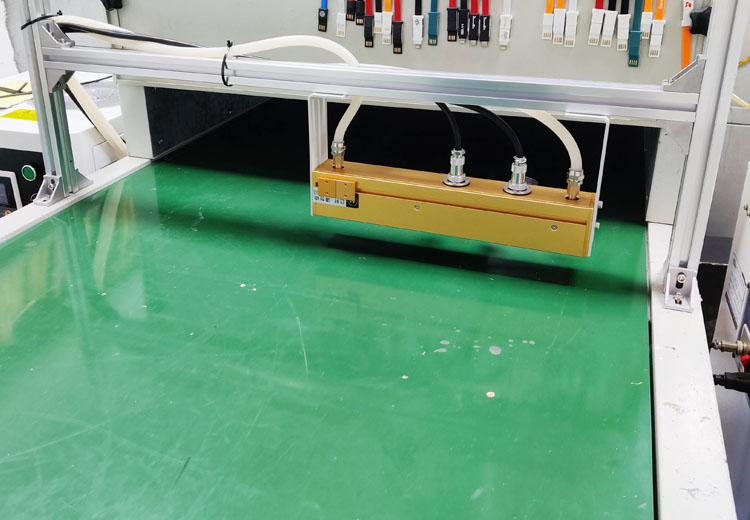
Introduction to High-Power Water-Cooled Curing Equipment Manufactured by Chinese LED UV Curing Lamp Factories
News 2026-05-26
Across industrial sectors worldwide—including printing, coating, and electronics manufacturing—Chinese-made LED UV curing equipment supports the ultraviolet curing processes on factory assembly lines in numerous countries. From small components to finished products, this technology has revolutionized traditional manufacturing methods, significantly enhancing both product quality and production efficiency. In recent years, while people have achieved a high level of material satisfaction in their lives, the accompanying issue of gradual environmental degradation has emerged as a matter of paramount concern. The challenge of reconciling sustainable production with environmental protection—a dilemma that plagued us for a considerable time—has finally been largely resolved. Through the persistent research and experimentation conducted day after day and year after year by experts across various fields, most of the issues inherent in industrial production have been successfully addressed through technological upgrades and refinements. The replacement of mercury lamps—which emit toxic mercury vapor during the curing process—with LED UV curing lamps serves as a prime microcosm of the technological advancements achieved by China’s LED UV curing equipment manufacturing industry.
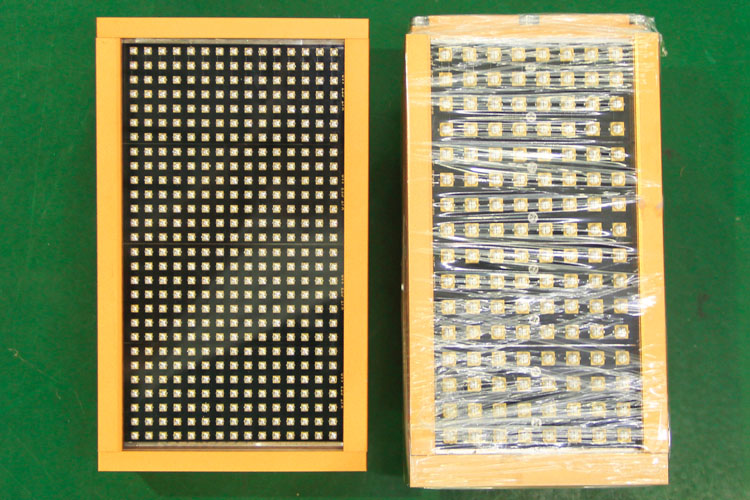
Furthermore, the high-power, water-cooled UV curing equipment manufactured by Chinese LED UV curing light factories offers benefits that extend beyond mere environmental friendliness; its low-temperature curing capability effectively overcomes the inherent limitation of traditional mercury lamps—namely, their inability to cure heat-sensitive materials due to high operating temperatures. Moreover, by concentrating electrical energy into a narrow band of UV wavelengths specifically optimized for curing, this technology achieves energy savings of over 50% compared to mercury lamps. Its modular design—featuring customizable LED bead configurations and interchangeable modules—allows for seamless adaptation to diverse operating environments and enables the precise customization of curing areas, thereby streamlining production processes and driving the modern industrial sector toward greater scientific rigor and intelligent automation.
While many factory professionals have encountered LED UV curing lamps, their core operating principle is not complex. The high-power, water-cooled curing equipment manufactured by Chinese factories relies on LED beads to emit stable ultraviolet light waves, typically at wavelengths of 365nm, 380nm, 395nm, 405nm, and 415nm. When ultraviolet light of a specific wavelength irradiates the surface of photosensitive materials—such as UV adhesives, UV inks, varnishes, or coatings—photoinitiators within the material rapidly undergo a photochemical reaction. This process completes the transition from a liquid to a solid state within just 1 to 3 seconds, eliminating the need for high-temperature baking or prolonged air-drying, thereby significantly streamlining production workflows.
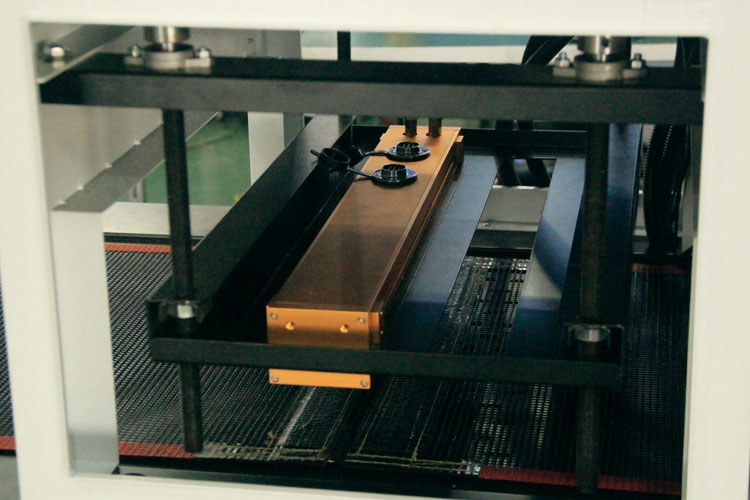
For high-speed production lines, if the energy output of traditional mercury lamps proves insufficient, the standard solution is simply to install additional lamps. In contrast, LED UV curing lamps are designed to concentrate electrical energy into a specific, narrow UV wavelength band optimized for curing; consequently, they are engineered with a built-in energy reserve of over 20% right from the outset. When deployed in actual production environments, these UV lamps typically operate at approximately 70% of their maximum energy and power output. This design offers a distinct advantage: when production throughput needs to be increased, there is no need to install additional lamps—one simply needs to adjust the UV energy output level to achieve the required curing effect. Simultaneously, this approach significantly extends the operational lifespan of the LED curing lamps. Furthermore, these units support instant start-up and shut-down capabilities, enabling immediate curing; they can be seamlessly integrated into automated assembly lines for continuous, uninterrupted operation, thereby effectively meeting the demands of high-volume, rapid industrial production.
Traditional curing equipment generates a significant amount of high-temperature heat during operation, making it highly prone to causing deformation, yellowing, and wrinkling in heat-sensitive materials—such as films, plastics, paper, and acrylics—which often results in product spoilage. In contrast, LED UV curing lamps utilize a “cold light source” curing process characterized by low-temperature operation and high yield rates. The temperature rise during operation is minimal, ensuring that the substrate remains undamaged. This technology is particularly well-suited for the rapid curing and production of heat-sensitive items, including precision electronic components, flexible printed materials, ABS, PP, and PE plastics, as well as mobile phone screens and lenses.
Area light sources cover a larger curing area than line light sources, thereby delivering effective curing results for products with relatively broad surfaces during UV curing processes. Furthermore, due to the expansive coverage of area light sources, products requiring curing do not need to be positioned with strict precision; as long as they fall within the irradiation zone, excellent curing results can still be achieved.