Ultra-Low Power Consumption Design: Save Over 70% on Electricity and Slash Long-Term Costs
News 2026-10-29
Introduction
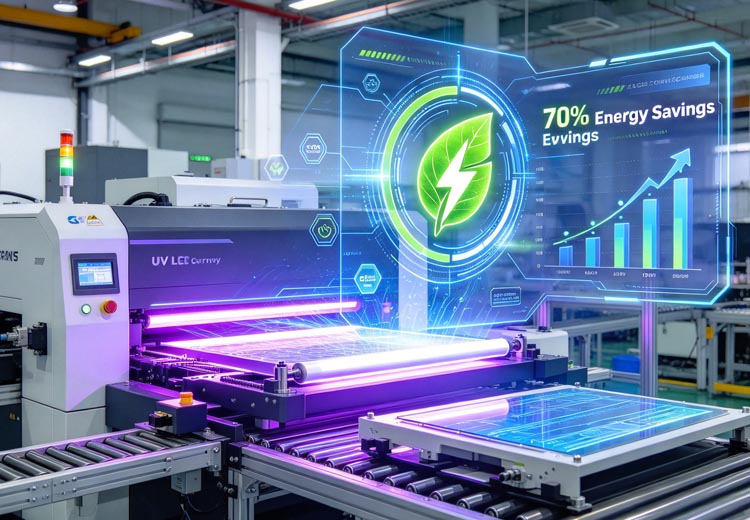
When calculating the cost of manufacturing, material and labor expenses are usually at the top of mind. However, the invisible drain of electricity often goes unnoticed until the utility bills arrive. In high-volume production environments, UV curing systems can consume as much energy as heavy machinery. Traditional mercury lamps are notorious energy hogs, converting the vast majority of their electrical input into wasted heat. The shift toward ultra-low power consumption design in UV LED technology is not just an environmental initiative; it is a massive financial advantage, offering over 70% in energy savings and a direct cut to long-term operational costs.
The Energy Black Hole of Traditional UV Curing
To appreciate the savings of modern LED systems, we must understand why traditional systems waste so much power:
Low Conversion Efficiency: Mercury vapor lamps operate by heating gas to extreme temperatures. Up to 80% of the electrical energy they consume is converted into infrared heat, with only a small fraction becoming useful UV light. Massive cooling systems must then be deployed to remove this heat, consuming even more electricity.
The Idle Power Penalty: Mercury lamps require a long warm-up phase and cannot be turned off and on quickly. Therefore, factories often leave them running at full power all day—even during breaks, shift changes, or material reloading—wasting vast amounts of electricity when no product is being cured.
Short Lifespan vs. Energy: As mercury lamps age, their efficiency drops, meaning they require even more power to maintain the necessary UV output for curing.
How UV LED Achieves 70%+ Energy Savings
Ultra-low power consumption is the hallmark of modern UV LED curing technology. Here is how it achieves massive electricity reductions:
High Electrical-to-Optical Conversion: UV LEDs are semiconductor devices. They convert electrical current directly into a specific, narrow wavelength of UV light. Over 50% (and in some advanced designs, up to 70%) of the electrical energy is converted into useful UV light, not wasted heat. The highly targeted output means less energy is wasted on unused wavelengths.
On-Demand Operation (Instant-On): UV LEDs require zero warm-up time. They reach 100% peak irradiance in microseconds. This means the UV light can be turned off during production gaps and turned back on instantly when the conveyor moves. This on-demand curing eliminates idle power consumption completely.
Targeted Directional Light: Traditional lamps emit light in a 360-degree radius, requiring reflectors that lose energy. UV LEDs are directional. The light is focused directly onto the substrate, ensuring every watt of power goes exactly where it is needed.
Engineering the Ultra-Low Power System
Achieving these dramatic savings requires a system-level design approach:
High-Efficiency Drivers: Advanced power supplies ensure minimal electrical loss during the conversion process, delivering stable current to the LEDs without overheating.
Smart Thermal Management: Because LEDs generate less heat, the water chillers or air-cooling fans do not need to work as hard. This dual savings—less heat generated and less energy required to cool the system—compounds the energy efficiency.
Optical Optimization: Precision lenses and reflectors ensure maximum UV light delivery to the workpiece, meaning the LEDs can run at lower power settings while still delivering the required curing dose.
The Long-Term Financial Impact
The return on investment (ROI) for ultra-low power UV systems is substantial:
Drastically Lower Utility Bills: A 70% reduction in power consumption for the curing process translates to tens of thousands of dollars saved annually in electricity alone.
Reduced HVAC Costs: Because traditional lamps radiate massive heat into the factory, air conditioning systems must work overtime. Ultra-low power LEDs reduce the ambient heat, saving on facility cooling costs.
Sustainability and ESG Goals: Reducing electricity consumption directly lowers a factory’s carbon footprint, helping manufacturers meet strict environmental regulations and corporate sustainability targets.
In manufacturing, every watt saved is a penny earned. The era of using brute-force power and massive heat to cure materials is over. By adopting ultra-low power consumption UV LED designs, manufacturers can save over 70% on electricity, eliminate idle energy waste, and drastically reduce their long-term operational expenses. Investing in energy efficiency today is the key to a profitable and sustainable tomorrow.