Full-Field Uniform Illumination: Complete Cure at Edges, Corners, and Shadowed Areas
News 2026-10-19
Introduction
A curing system can pass inspection in the center of a part and still fail at the edge. Corners, recesses, sidewalls, and shadowed areas often receive less light than the open surface. The result is uneven cure: hard in the middle, soft at the perimeter, tacky in a recess, or weak in a bond line that never saw enough photons. Full-field uniform illumination addresses this problem directly. Instead of concentrating energy on the easiest area, it distributes light evenly across the entire cure zone, including the geometries that are usually missed.
Why Edges, Corners, and Shadows Are Hard to Cure
Light travels in straight lines. A flat lamp above a flat surface may look impressive on a radiometer, but a raised edge can block light from reaching the sidewall. A deep recess can act like a narrow well, allowing only a small cone of light to reach the bottom. Corners receive light from fewer directions, and complex parts can cast shadows on themselves. Oxygen inhibition can make the surface worse, especially where airflow is restricted. These are not rare exceptions. They are normal conditions in electronics, medical devices, automotive parts, and precision assembly.
What Full-Field Uniform Illumination Really Means
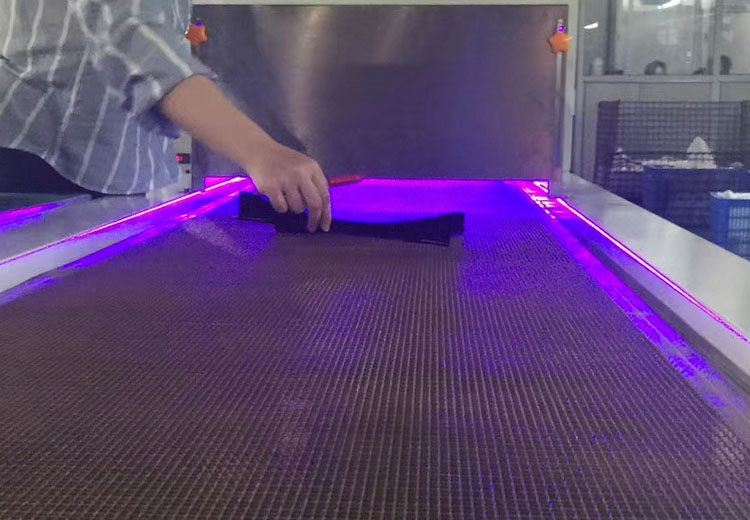
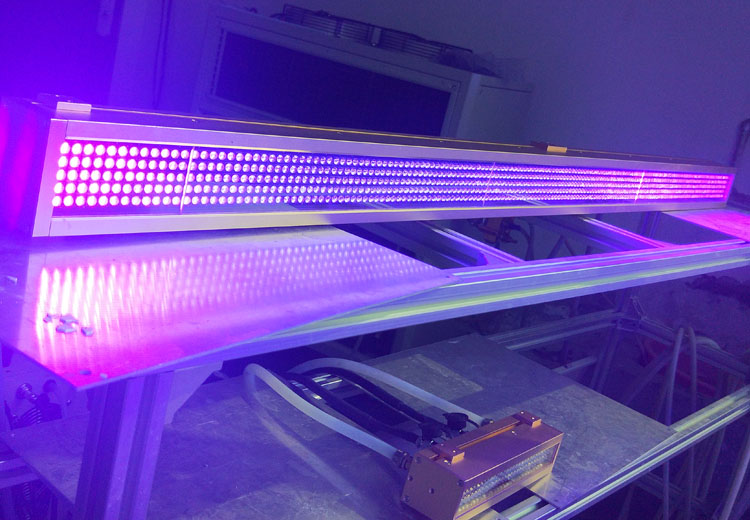
Full-field uniform illumination is not simply “more lamps.” It means the irradiance profile across the cure area is controlled and consistent. The center, perimeter, and recessed features should receive the dose they need within the process window. Uniformity should be measured at the cure plane, not only at the lamp window. A good system combines efficient optics, well-designed reflectors, appropriate lamp spacing, and stable cooling. It also considers the part geometry, because a uniform light field can still be blocked by the part itself.
Optics and Reflector Design Matter
Optics shape the light. Diffusers can soften hot spots. Reflectors can redirect light toward sidewalls and edges. Multi-angle exposure can reach surfaces that a single top-down lamp cannot illuminate. For deep recesses, collimated or angled light may help, but the wavelength and adhesive chemistry must still match. A poorly designed reflector can create a bright ring and a dark center, or overheat one area while leaving another undercured. The goal is not maximum brightness in one spot. It is controlled distribution across the whole cure zone.
Dose Uniformity, Not Just Irradiance Uniformity
Irradiance is power per area. Dose is irradiance multiplied by time. A moving conveyor can deliver a uniform dose even if the irradiance profile has minor variation, provided the part passes through the field consistently. But edges and shadows can experience a shorter effective exposure or a lower local irradiance. For three-dimensional parts, the effective dose on a sidewall may be much lower than on a top surface. Process validation should therefore measure dose at the locations that matter: the corner, the recess bottom, the shadowed sidewall, and the bond line.
Handling 3D Parts and Shadowed Geometry
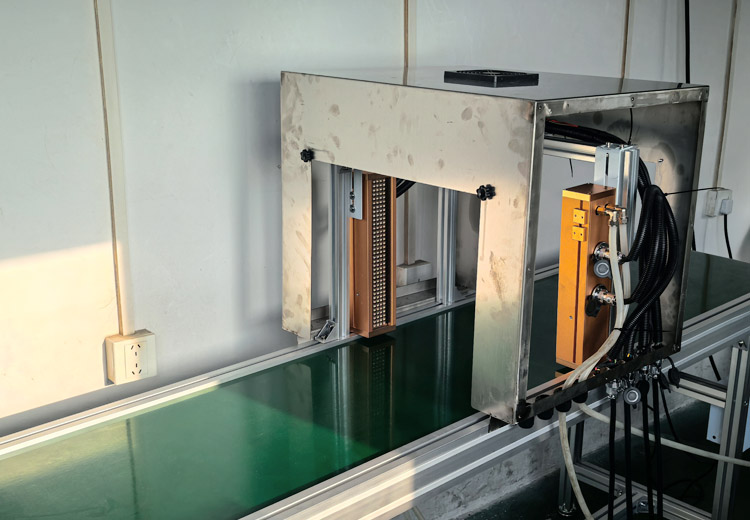
Three-dimensional parts require more than a flat light field. Rotating fixtures, multi-directional lamps, or angled arrays can expose sidewalls and recesses from more than one direction. In some cases, a dual-cure adhesive or a light-transmitting substrate can help, but the first step is to understand the geometry. A part that looks simple from above may have a deep channel, an overhang, or a narrow gap. Full-field uniform illumination should be designed around the actual part, not a flat test coupon.
Thermal Control and Uniform Cure
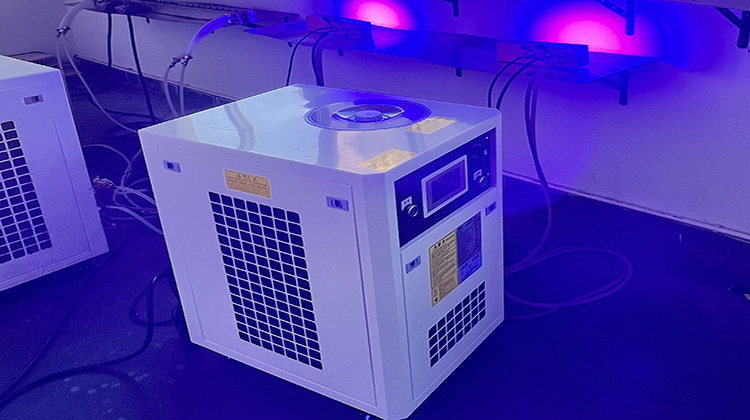
More light often means more heat. If the cure field is uneven, thermal exposure may also be uneven. A hot edge can distort a thin substrate, while a shadowed area may remain soft. Uniform illumination should be paired with uniform cooling. Airflow, heatsink design, and lamp distance all affect both cure and temperature. The goal is a stable process window that protects the part, the adhesive, and the light source.
How to Validate Cure at Edges, Corners, and Shadows
Start with calibrated radiometry at the cure plane. Map the irradiance profile across the full field. Then place dosimeters or test coupons at the edge, corner, recess bottom, and shadowed sidewall. Use application-relevant checks such as adhesion, tack-free surface, hardness, FTIR conversion, or bond strength. Do not rely on a visual pass in the center. If the part has a critical shadowed area, test it directly. A process that works on a flat coupon may fail on a real three-dimensional part.
Practical Checklist for Uniform Cure
Map irradiance and dose across the entire cure zone, including the perimeter.
Test the actual part geometry, not only flat samples.
Identify edges, corners, recesses, overhangs, and shadowed sidewalls.
Use reflectors, diffusers, or multi-angle exposure where needed.
Confirm wavelength and dose match the adhesive or coating chemistry.
Control heat and airflow across the whole field.
Validate cure at the hardest-to-reach locations.
Recheck after lamp aging, optics cleaning, or fixture changes.
Applications
Full-field uniform illumination is valuable in electronics assembly, medical device bonding, automotive sensor packaging, optical modules, printed electronics, and precision coating. It is especially important when a small shadowed area can cause a hidden defect. Consistent cure at edges and corners improves yield, reduces rework, and supports reliable performance after aging.
Conclusion
Curing the center is easy. Curing the edge, the corner, the recess, and the shadowed sidewall is the real test. Full-field uniform illumination turns those difficult areas into controlled process zones. With the right optics, reflector design, multi-angle exposure, dose mapping, and validation, complete cure becomes more consistent across the entire part—not just where the light is strongest.
FAQ
Q1: What is full-field uniform illumination?
A: It is a controlled light field that delivers consistent irradiance and dose across the entire cure area, including edges, corners, and recessed features.
Q2: Why do shadowed areas cure poorly?
A: Light travels in straight lines. Part geometry can block light from reaching sidewalls, recess bottoms, and corners, resulting in lower effective dose.
Q3: Can more lamps solve shadowing?
A: Not always. More lamps can create hot spots and heat. Reflectors, diffusers, angled exposure, and fixture design may be more effective than simply adding power.
Q4: How do I verify cure in a deep recess?
A: Use a dosimeter or test coupon at the recess bottom, and combine it with adhesion, hardness, or conversion testing. Do not rely on surface touch alone.
Q5: Does uniform illumination work for 3D parts?
A: It can, but the system must be designed around the part geometry. Multi-directional exposure, rotation, or angled arrays may be needed.