Analysis of Common Troubles & Practical Improvement Solutions for UV Ink Curing Using Water-Cooled LED UV Curing Lamps
News 2026-06-02
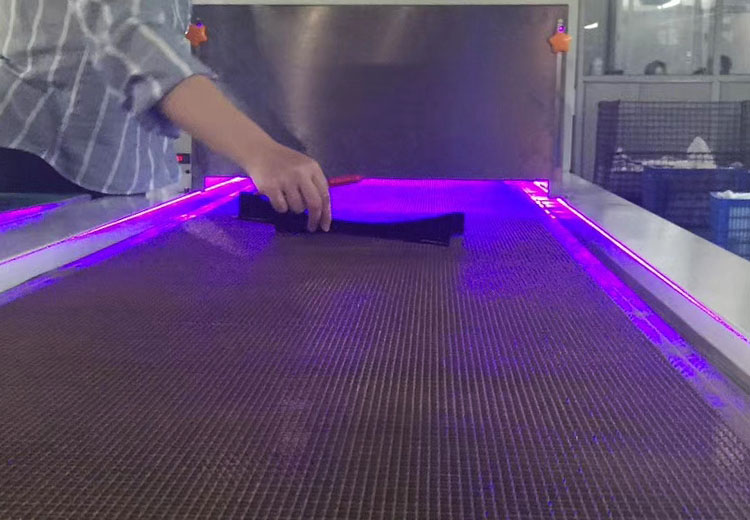
In recent years, stricter environmental regulations have prompted numerous printing factories to phase out traditional mercury lamps and switch to LED UV curing lamps. Among these options, water-cooled LED UV curing systems have become the preferred choice for high-speed digital printing and flexible packaging color printing thanks to their stable heat dissipation and consistent full-load long-running performance. Many manufacturers purchased water-cooled LED UV curing lamps expecting higher finished product yields and lower electricity costs. However, after putting the equipment into formal production, they encountered recurring curing defects on UV ink, with results vastly inferior to those from older mercury lamp setups. Most operators tend to attribute all curing issues to defective lamp hardware, yet the majority of problems stem from mismatches among three core factors: lamp optical characteristics, UV ink formulation and production line operating conditions. Drawing from years of on-site equipment commissioning experience, this article analyzes typical curing pain points from a fresh perspective instead of following outdated online analysis.
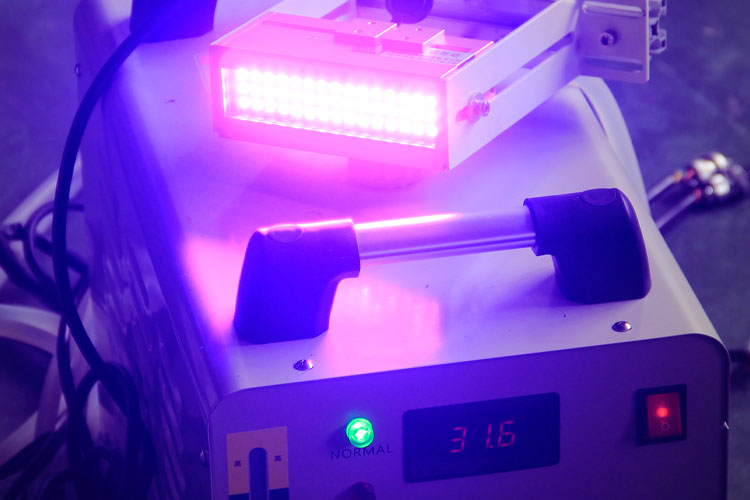
The most prevalent headache for many manufacturers is tacky uncured ink surfaces despite the lamp meeting rated specifications and delivering sufficient measured UV energy. While conventional explanations pin this issue solely on oxygen inhibition, field experience reveals constant low operating temperature of water-cooled LED UV curing lamps is an overlooked root cause. Traditional mercury lamps run at high working temperatures; such heat mildly disperses air lingering on the ink film surface and indirectly reduces oxygen inhibition. In contrast, water-cooled LED UV lamps maintain a steady operating temperature around 20°C year-round. At low temperatures, ambient air clings tightly to the ink layer and cannot disperse via thermal convection, leaving oxygen continuously to block crosslinking reactions. Even at maximum lamp power, surface ink curing gets inhibited. Additionally, the lamp lenses stay cold permanently, causing evaporated ink additives and workshop moisture to condense into invisible inner lens fog, which gradually cuts UV transmittance and leads to poor surface drying. Instead of simply switching to anti-oxygen UV ink, factories can install simple hot air blowers in front of lamp arrays to sweep away surface air on printed ink. Weekly disassembly of lamp heads to remove condensed lens fog is also essential for stable curing.
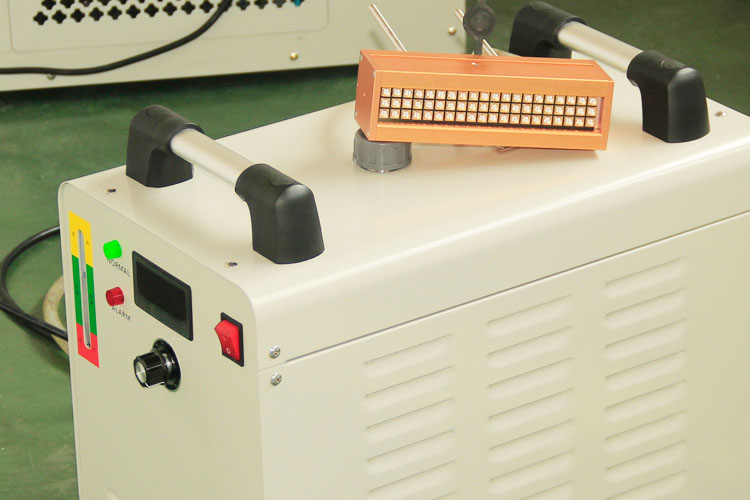
Another frequent defect is wrinkled ink film on thick coatings or white ink prints, featuring fully cured outer skin but uncured inner layers. The common belief blames excessive ink thickness and poor UV penetration, yet the real culprit lies in ultra-stable energy output unique to water-cooled LED UV curing lamps. Air-cooled LED lamps gradually heat up and lose light intensity during continuous operation; falling UV power slows surface curing and allows UV rays to penetrate deeper into the ink layer over time. By contrast, precise temperature control keeps water-cooled lamps running at steady high power, instantly forming a hard dense outer shell on the ink surface before UV light can reach inner ink. Uncured inner ink shrinks gradually afterward and ruptures the hardened outer layer to form wrinkles. White ink loaded with titanium dioxide reflects most UV radiation, while black ink carbon black absorbs UV heavily, worsening the “hard shell, soft core” flaw in heavy coating applications. As a practical fix, operators can leverage adjustable graded power of water-cooled lamps to implement two-stage curing: low-power pre-curing for surface shaping followed by high-power deep curing, alongside splitting thick single-pass printing into two thin coating runs.
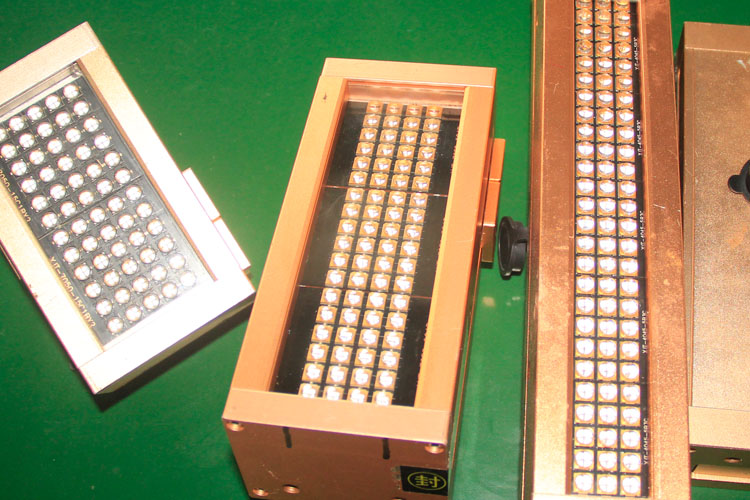
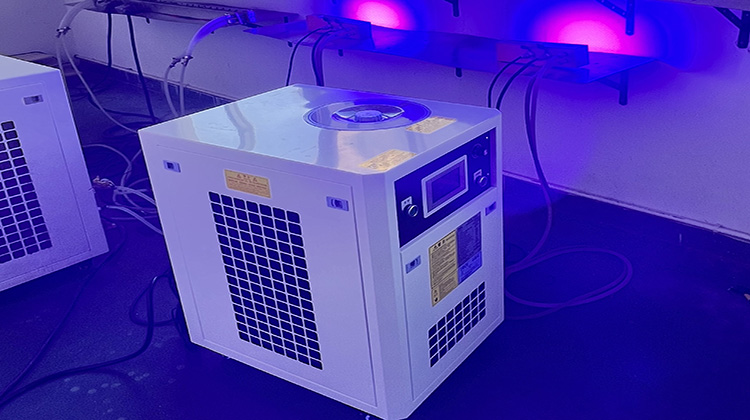
The third common malfunction is inconsistent ink adhesion across a single printed sheet, with firmly bonded ink on one side and easily peeled coating on the other. Standard troubleshooting only checks for damaged LED beads, whereas unbalanced internal water circulation in cooling pipelines is the key trigger. Water-cooled LED UV curing lamps remove heat via circulating coolant. Scale buildup or partially clogged filters slows down coolant flow in localized pipeline sections, leading to subtle overheating of nearby LED chips. Though the chips do not burn out, their output UV wavelength shifts slightly. Photoinitiators inside UV ink only absorb UV within specific wavelength ranges; minor wavelength deviation drastically reduces light absorption efficiency and incomplete curing inevitably weakens adhesion. Air-cooled LED lamps have no circulating water system and avoid such issues, explaining why many factories find unexpected uneven curing on their water-cooled units. Routine maintenance should include regular coolant replacement and semi-annual pipeline descaling. Operators also need to test light intensity across left and right lamp segments with an UV energy meter periodically.
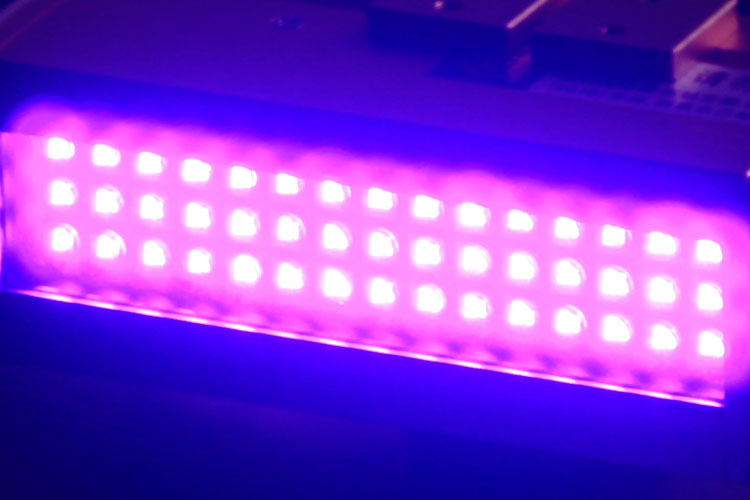
Many factories mistakenly continue using legacy mercury-lamp-formulated UV ink with LED UV curing lamps, resulting in frequent ink cracking and brittleness. Beyond common claims of mismatched wavelength, low-temperature curing from water-cooled structures accelerates internal stress cracking. High heat from mercury lamps allows ink to release inner stress slowly during crosslinking; low-temperature LED water-cooled curing speeds up molecular crosslinking drastically with insufficient stress relaxation, triggering tiny cracks during subsequent product storage. Apart from switching to LED-specialized UV ink, moderately lowering production line speed extends UV exposure time, slows crosslinking and facilitates full internal stress release.
Overall, LED UV curing lamps, especially water-cooled variants, deliver outstanding performance marked by energy efficiency, eco-friendliness and far longer service life compared to mercury lamps. Most curing defects arise from operators applying outdated mercury lamp production logic onto LED curing processes. Only by abandoning conventional curing mindsets and adjusting ink formulas and production parameters to match the low-temperature, stable-output traits of water-cooled LED UV lamps can manufacturers maximize equipment advantages and fundamentally eliminate various UV ink curing imperfections.