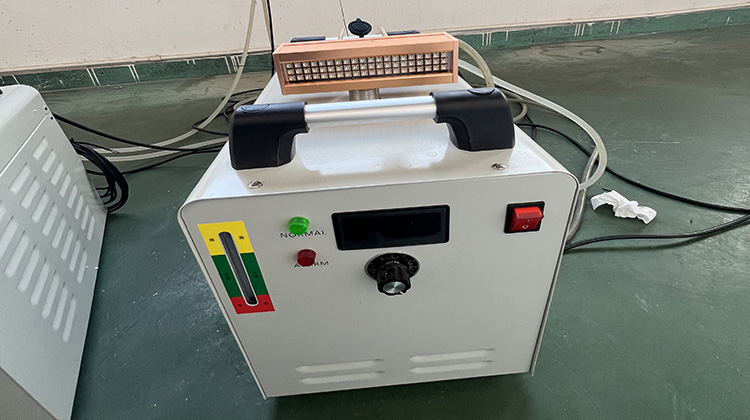
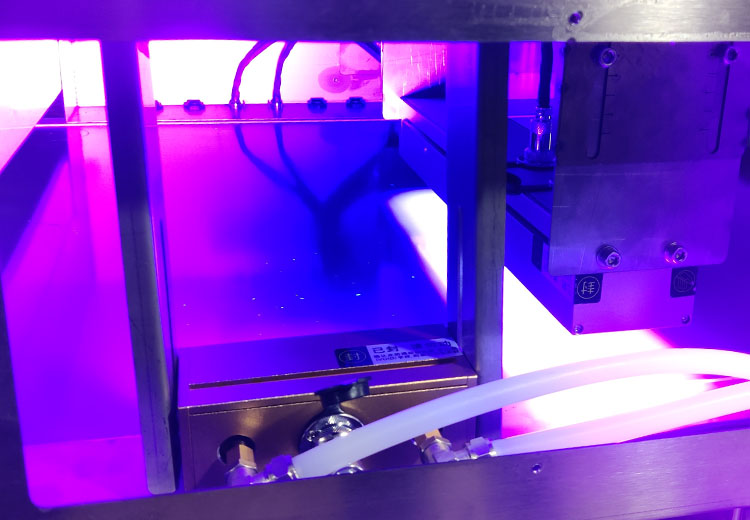
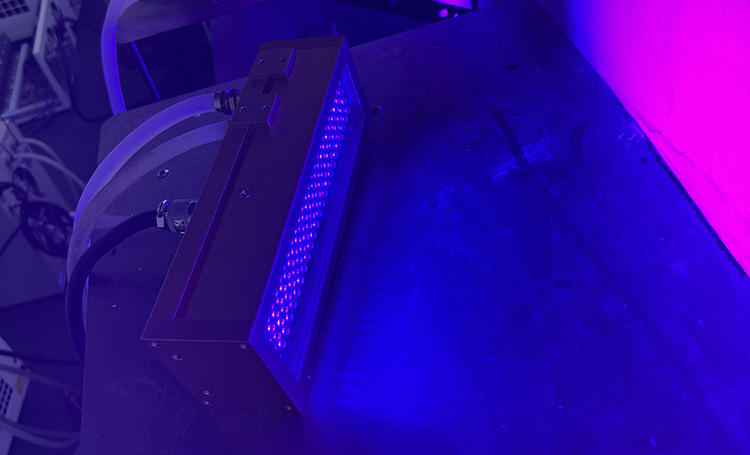
LED UV Curing Machine Manufacturer Explains the Principle of Dual UV Photocuring
News 2026-04-17
Generally speaking, LEDUV curing machines are typically used for the bonding and curing of transparent objects (or where one of the two bonded parts is transparent), as well as for surface coating and curing applications. Since the UVLED curing process is light-initiated, it is difficult to achieve deep curing on colored systems and opaque materials. Additionally, complex product component geometries are also unfavorable for LEDUV photocuring.
Through research, development and testing, a dual UV photocuring system that combines conventional photocuring with other UV curing mechanisms has been developed to overcome the above curing challenges via two independent stages with different reaction principles.
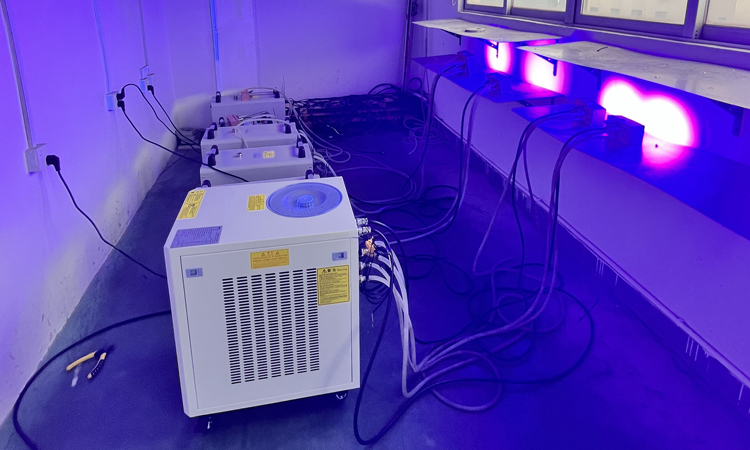
Dual UV photocuring in LED UV curing machines consists of two phases: one stage relies on ultraviolet light reaction, while the other proceeds through dark reactions such as thermal curing, moisture curing, oxidative curing or anaerobic curing. In this way, ultraviolet light is used to quickly set the system or achieve “surface drying”, while dark reactions fully cure the “shadowed” areas or inner layers to reach “through curing”.
Dual UV photocuring expands the application of UV curing adhesives between opaque media, on complex-shaped substrates with ultra-thick adhesive layers, and in colored adhesive layers. This system gives UV curing adhesives stronger competitiveness. UV curing adhesives are synthesized using cycloaliphatic epoxy resin, polyester triol, polyurethane diol and sulfonium salt photoinitiators.