LED UV Curing Lamps: How Photoinitiators Behave in High and Low Temperatures
News 2026-04-25
In industries such as printing and electronic packaging, LED UV curing technology acts as a rapid shaping master, and photoinitiators serve as the core control switch in its operation. Once exposed to LED UV light, photoinitiators trigger chemical reactions, instantly turning liquid inks and adhesives into solid states. However, these “switches” are highly temperature-sensitive. Their performance varies drastically under high and low temperatures, ultimately compromising the curing result.
First, let’s look at high-temperature conditions. Just as people become irritable in the heat, rising temperatures accelerate the molecular movement of photoinitiators. Upon LED UV irradiation, photoinitiators break down faster to release reactive species (free radicals) that initiate reactions. This shortens the original curing time of several seconds and speeds up surface drying. Yet excess brings adverse effects. On one hand, some photoinitiators may decompose prematurely and fail before LED UV exposure, resulting in incomplete curing. On the other hand, excessive heat disrupts chemical reactions, causing cured coatings to turn yellow and brittle and weakening adhesion. Common issues include peeling printed patterns and poor bonding strength of adhesives. Especially in packaging printing, high temperatures may also cause shrinkage and deformation of film substrates, creating major production troubles.
Low-temperature environments pose another set of problems. Cold conditions slow down photoinitiators, leaving them sluggish. Reduced molecular movement drastically slows the decomposition of reactive species even after the photoinitiators absorb LED UV energy. Moreover, newly generated active substances are often trapped by ambient oxygen and impurities and cannot function properly. The most obvious symptoms are slow curing speed; even with prolonged light exposure, the coating surface remains sticky with insufficient internal curing. Low temperatures also increase the viscosity of inks and adhesives, leading to uneven dispersion of photoinitiators and poor penetration of LED UV light, which further worsens incomplete curing. This issue is prevalent in outdoor winter construction and cold-chain packaging production, greatly reducing the hardness and friction resistance of finished products.
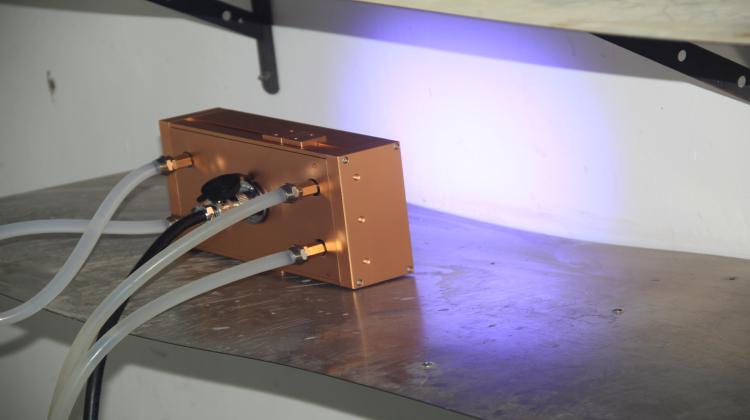
Most photoinitiators have an optimal working temperature range of 20–30°C. Within this range, LED UV energy is fully utilized to deliver fast, high-quality curing. Simple solutions are available for extreme temperatures: in high-temperature environments, appropriately reduce LED UV lamp power and increase irradiation distance to prevent heat accumulation. In low-temperature conditions, slightly raise lamp power, extend exposure time, or preheat substrates and inks moderately to ensure normal operation of photoinitiators.
Ultimately, the key to LED UV curing lies in enabling photoinitiators to function stably at suitable temperatures. Understanding their behavioral changes under high and low temperatures allows manufacturers to adjust processes according to actual working conditions and maintain consistent curing quality. This is critical to streamlining production processes and ensuring stable product quality.