Application of LED UV Curing Light Sources in Label Printing: Advantages, Process Compatibility and Technical Trends
News 2025-12-23
I. Application Background and Industry Demands
Label printing covers multiple sectors including food, daily chemicals, pharmaceuticals and logistics. The printed products are required to have properties such as wear resistance, water resistance and chemical corrosion resistance, and need to be dried rapidly after printing to avoid smudging during stacking. Traditional curing processes have significant drawbacks: mercury lamp curing consumes high energy and causes environmental pollution due to mercury content, while the thermal radiation generated during curing tends to deform thin-film substrates; solvent-based inks dry slowly under natural conditions, which limits single-shift production capacity, and solvent volatilization fails to meet the environmental standards for food packaging (e.g., FDA certification).
With the development of technologies such as high-speed rotary printing and smart labels (RFID/NFC), the speed of label printing has exceeded 50 meters per minute. Meanwhile, higher requirements have been put forward for compatibility with multiple materials (e.g., PET, PE, aluminum foil, self-adhesive materials), curing uniformity and environmental friendliness. Koinu UV LED curing light sources have emerged as the core choice for technological upgrading.
II. Core Technical Parameters of LED UV Curing Light Sources
Wavelength and Spectrum Control
It supports single-wavelength output ranging from 365nm to 405nm, which can match the absorption peaks of photoinitiators in different types of UV inks such as epoxy resin and acrylic. The compatibility rate reaches over 97%.
Energy Output Characteristics
The energy density can be adjusted within the range of 50–10,000 mW/cm², with the light intensity uniformity up to 90%, ensuring consistent curing of ink layers during large-area printing.
Temperature and Heat Dissipation Design
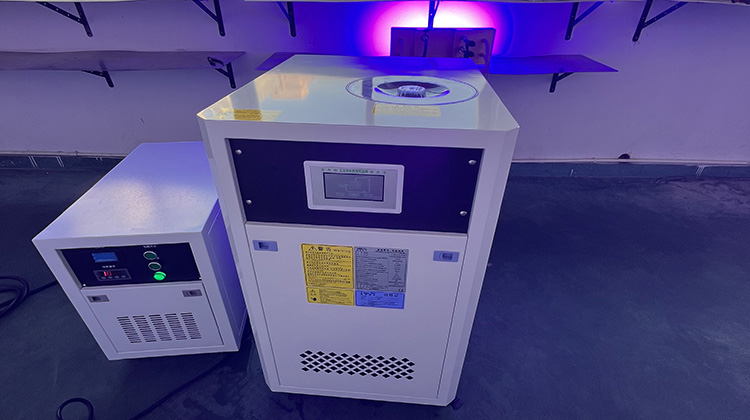
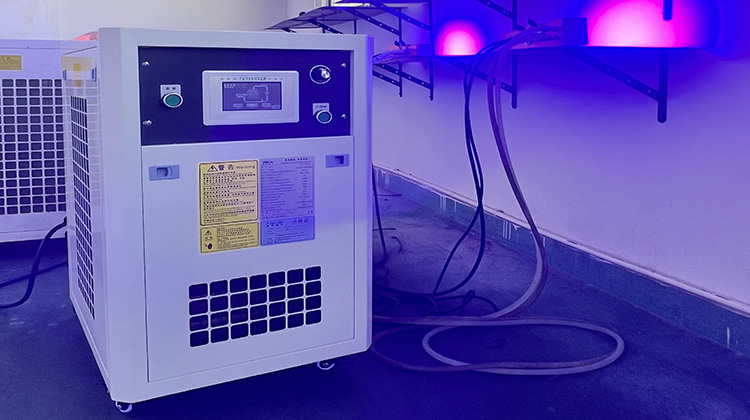
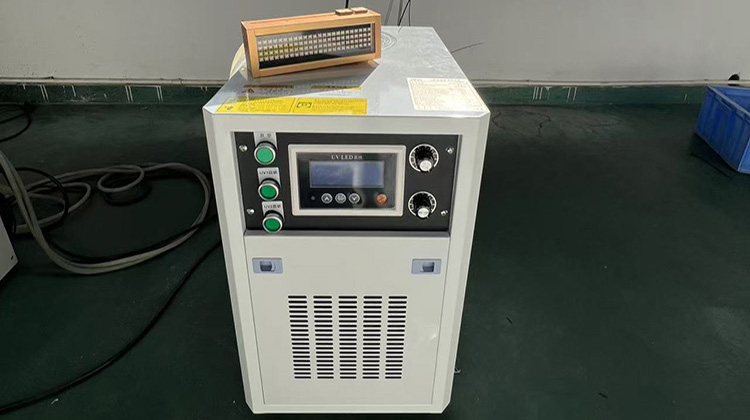
Adopting cold light source technology, the temperature rise of the substrate surface during irradiation is less than 5℃, preventing film shrinkage or paper deformation. Equipped with air-cooled or water-cooled heat dissipation systems, the thermal resistance is less than 0.5℃/W, and the light decay rate is 3% per 1,000 hours of continuous operation.
Environmental and Service Life Indicators
It contains no mercury components and emits no ozone, complying with the RoHS 2.0 environmental directive. The service life of lamp beads reaches 20,000–30,000 hours, which is 5–8 times that of traditional mercury lamps.
III. Process Compatibility for Typical Printing Scenarios
High-Speed Printing of Self-Adhesive Labels
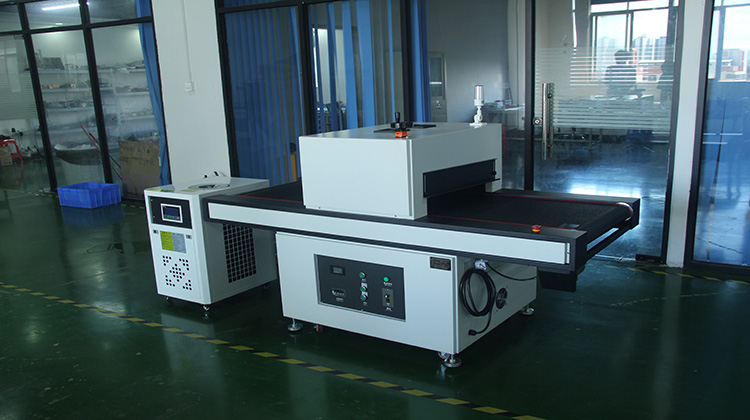
On narrow-web rotary printing presses, LED UV curing light sources are adapted to 110mm printing width through modular design. The 395nm wavelength matches acrylic UV inks, enabling curing to be completed within 1–3 seconds to achieve “print and dry immediately”. Combined with an automatic unwinding and rewinding system, the single-shift production capacity is increased by 40%.
Smart Label Manufacturing
In RFID label printing, the 365nm wavelength light source can accurately cure the protective ink on the chip surface, with the light spot diameter controlled within 2–5mm to avoid energy diffusion that may damage chip circuits. After curing, the ink layer adhesion reaches Grade 5B (ASTM D3359 standard), with no peeling after 100,000 times of reading tests.
Flexible Packaging Label Printing
For PET and PE film substrates, the 385nm wavelength and water-cooled heat dissipation system are adopted. After curing, the rub resistance of the ink is improved by 300%, and it can withstand more than 60 friction cycles under a 500g load, meeting the weather resistance requirements for food flexible packaging.
IV. Application Data
After replacing mercury lamps with LED UV light sources, a food label enterprise reduced unit energy consumption by 70%, saved more than 15,000 kWh of electricity annually, and cut equipment maintenance costs by 90%.
After applying LED UV light sources, a smart label factory reduced the printing defect rate from 3% to 0.2%, and the curing cycle of RFID labels is fully matched with the printing speed of 50 meters per minute.
In terms of environmental indicators, the equipment emissions meet the ISO 14644-1 Class 7 workshop air quality standard, helping products pass FDA and California Proposition 65 environmental certifications.